


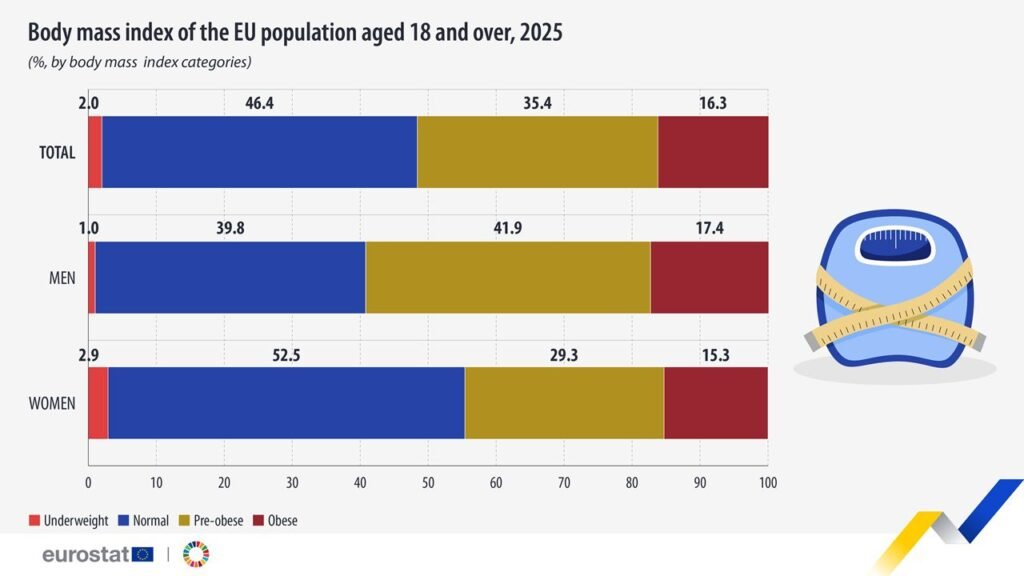
16.3 per cent of people in the EU aged 18 or over were obese in 2025, meaning that they had a body mass index of 30 or higher, according to the EU’s statistics agency Eurostat.
The Eurostat figures show that a further 35.4% of the population were pre-obese, with a body mass index between 25 and 30. Overall, more than half of the EU population were overweight, either obese or pre-obese.
Men were more likely to be overweight than women. The obesity rate was 17.4% for men and 15.3% for women. Additionally, 41.9% of men were pre-obese, compared with 29.3% of women. In contrast, women were more likely to be underweight (2.9%) than men (1.0%).
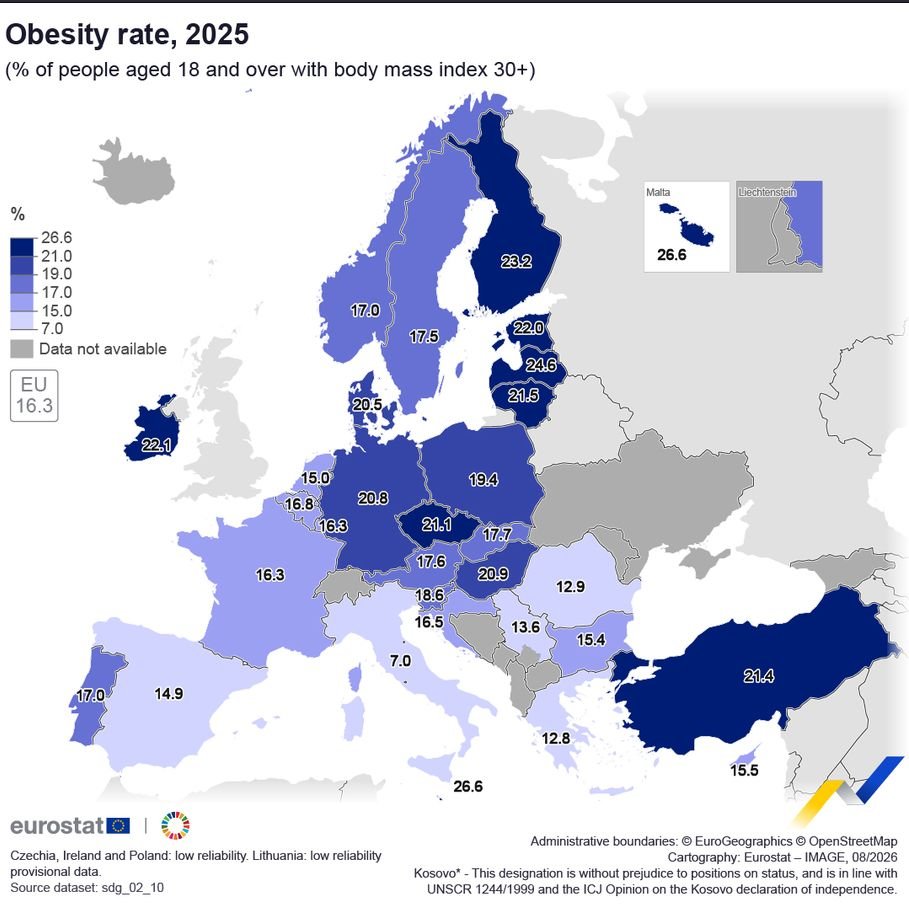
Highest obesity rates were recorded in Malta, where more than a quarter of the population was obese (26.6%). The next highest rates were in Latvia (24.6%) and Finland (23.2%). The lowest rates were recorded in Italy (7.0%), Greece (12.8%) and Romania (12.9%).
Obesity rate is one of the indicators used to monitor Sustainable development goal (SDG) 2 – zero hunger and SDG 3 – good health and well-being. SDG 2 seeks to end hunger and malnutrition, achieve food security and improved nutrition and promote sustainable agriculture. While ending hunger and all forms of malnutrition are key objectives of the 2030 Agenda, obesity is a more widespread nutrition-related health issue in Europe. SDG 3 aims to ensure healthy lives and promote well-being for all at all ages.
Publications on the sustainable development goals – Eurostat