Close Menu
    Latest Category
    • Finance
    • Tech
    • EU Law
    • Energy
    • About
    • Contact
    EUbusiness.com | EU news, business and politicsEUbusiness.com | EU news, business and politics
    Login
    • EU News
    • Focus
    • Guides
    • Press
    • Jobs
    • Events
    • Directory
    EUbusiness.com | EU news, business and politicsEUbusiness.com | EU news, business and politics
    Home » EU strikes deal to ban products made with forced labour

    EU strikes deal to ban products made with forced labour

    npsnps5 March 2024
    — Filed under: employment EU News Headline2 Trade
    Share
    Facebook Twitter LinkedIn Pinterest Email
    EU strikes deal to ban products made with forced labour

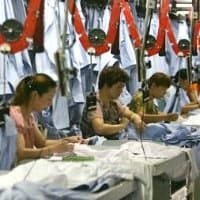
    clothes-textiles-sweatshop-Image by marissaorton.jpg

    (BRUSSELS) – Products made with forced labour are to be banned from the EU market under the provisional deal agreed Tuesday by the European Parliament and EU Council.

    A new regulation would create a framework for enforcing this ban, including through investigations, new IT solutions and cooperation with other authorities and countries.

    Roughly 27.6 million people are in forced labour around the world, in many industries. Most forced labour takes place in the private sector, while some is imposed by public authorities.

    According to the agreed text, national authorities or, if third countries are involved, the EU Commission, will investigate suspected use of forced labour in companies’ supply chains. If the investigation concludes that forced labour has been used, the authorities can demand that relevant goods be withdrawn from the EU market and online marketplaces, and confiscated at the borders. The goods would then have to be donated, recycled or destroyed. Goods of strategic or critical importance for the Union may be withheld until the company eliminates forced labour from its supply chains.

    Firms that do not comply can be fined. However, if they eliminate forced labour from their supply chains, banned products can be allowed back on the market.

    The Commission will draw up a list of specific economic sectors in specific geographical areas where state-imposed forced labour exists. This will then become a criterion to assess the need to open an investigation.

    The EU executive can also identify products or product groups for which importers and exporters will have to submit extra details to EU customs, such as information on the manufacturer and suppliers of these products.

    A new ‘Forced Labour Single Portal’ would be set up to help enforce the new rules. This would include guidelines, information on bans, database of risk areas and sectors, as well as publicly available evidence and a whistleblower portal. A ‘Union Network Against Forced Labour Products’ would help to improve cooperation between authorities.

    The rules foresee cooperation with third countries, and this may include information exchange on risk areas or products and sharing best practices, in particular with countries with similar legislation in place. The Commission acting as a lead competent authority may also carry out checks and inspections in third countries, if the relevant company and the government of the third country agree to it.

    The Parliament and Council now both have to give their final green light to the provisional agreement. The regulation will then be published in the Official Journal and enter into force the following day. EU countries will then have 3 years to start applying the new rules.


    Commission proposal

    Procedure file, European Parliament

    Add A Comment
    Leave A Reply Cancel Reply

    You must be logged in to post a comment.

    nps
    • Website

    Related Content

    Crazy man - Photo Designed by Freepik

    The SME Cash Flow Problems Facing European Companies Today

    Trade in cars - Photo by Tom Fisk on Pexels

    EU trade in goods in Q4 2025 shows EUR 28.4 bn surplus

    Raffaele Fitto - Photo by Bogdan Hoyaux © European Union 2026

    EU to step up support for states bordering Russia, Belarus and Ukraine

    Eurogroup for Animals logo

    Political Adviser – Food Systems, Eurogroup for Animals

    SHEIN - Photo by appshunter.io on Unsplash

    EU launches probe in Shein for potentially selling child sexual abuse material

    Tax haven - Photo by John Prefer on Unsplash

    EU adds Vietnam and Turks & Caicos Islands to tax havens blacklist

    LATEST EU NEWS
    Trade in cars - Photo by Tom Fisk on Pexels

    EU trade in goods in Q4 2025 shows EUR 28.4 bn surplus

    18 February 2026
    Raffaele Fitto - Photo by Bogdan Hoyaux © European Union 2026

    EU to step up support for states bordering Russia, Belarus and Ukraine

    18 February 2026
    SHEIN - Photo by appshunter.io on Unsplash

    EU launches probe in Shein for potentially selling child sexual abuse material

    17 February 2026
    Tax haven - Photo by John Prefer on Unsplash

    EU adds Vietnam and Turks & Caicos Islands to tax havens blacklist

    17 February 2026
    Albares Bueno - Sefcovic - Photo by Bogdan Hoyaux © European Union 2025

    Brussels adopts Gibraltar treaty proposals

    17 February 2026

    Subscribe to EUbusiness Week

    Get the latest EU news

    CONTACT INFO

    • EUbusiness, 117 High Street, Chesham Buckinghamshire, HP5 1DE, United Kingdom
    • +44(0)20 8058 8232
    • service@eubusiness.com

    INFORMATION

    • About Us
    • Advertising
    • Contact Info

    Services

    • Privacy Policy
    • Terms
    • EU News

    SOCIAL MEDIA

    Facebook
    eubusiness.com © EUbusiness Ltd 2026

    Type above and press Enter to search. Press Esc to cancel.

    Sign In or Register

    Welcome Back!

    Login to your account below.

    Lost password?