Close Menu
    Latest Category
    • Finance
    • Tech
    • EU Law
    • Energy
    • About
    • Contact
    EUbusiness.com | EU news, business and politicsEUbusiness.com | EU news, business and politics
    Login
    • EU News
    • Focus
    • Guides
    • Press
    • Jobs
    • Events
    • Directory
    EUbusiness.com | EU news, business and politicsEUbusiness.com | EU news, business and politics
    Home » EU targets 15 pct reduction in gas use by next spring

    EU targets 15 pct reduction in gas use by next spring

    npsnps23 July 2022
    — Filed under: Consumer Energy EU News Headline1 Russia
    Share
    Facebook Twitter LinkedIn Pinterest Email
    EU targets 15 pct reduction in gas use by next spring

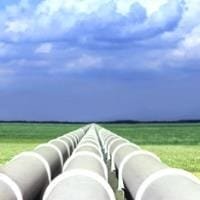
    Gas supplies – Photo EC

    (BRUSSELS) – With Europe facing the risk of further gas supply cuts by Russia, the European Commission put forward Wednesday a European Gas Demand Reduction Plan to reduce gas use in Europe.

    Almost half of the EU’s Member States have already affected by reduced deliveries, according to the EU executive, as a result of the Kremlin’s weaponisation of gas exports.

    Taking action now, it says, can reduce both the risk and the costs for Europe in case of further or full disruption, strengthening European energy resilience.

    With the new legislative tool and European Gas Demand Reduction Plan, consumers, public administrations, households, owners of public buildings, power suppliers and industry will be urged to take measures to save gas. The Commission will also accelerate work on supply diversification, including joint purchasing of gas to strengthen the EU’s possibility of sourcing alternative gas deliveries.

    The Commission is proposing a new ‘Council Regulation on Coordinated Demand Reduction Measures for Gas’, based on Article 122 of the Treaty. The new Regulation would set a target for all Member States to reduce gas demand by 15% between 1 August 2022 and 31 March 2023. The new Regulation would also give the Commission the possibility to declare, after consulting Member States, a ‘Union Alert’ on security of supply, imposing a mandatory gas demand reduction on all Member States. The Union Alert can be triggered when there is a substantial risk of a severe gas shortage or an exceptionally high gas demand. Member States should update their national emergency plans by the end of September to show how they intend to meet the reduction target, and should report to the Commission on progress every two months. Member States requesting solidarity gas supplies will be required to demonstrate the measures they have taken to reduce demand domestically.

    To help Member States deliver the necessary demand reductions, the Commission has also adopted a European Gas Demand Reduction Plan which sets out measures, principles and criteria for coordinated demand reduction. The Plan focuses on substitution of gas with other fuels, and overall energy savings in all sectors. It aims to safeguard supply to households and essential users like hospitals, but also industries that are decisive for the provision of essential products and services to the economy, and for EU supply chains and competitiveness. The Plan provides guidelines for Member States to take into account when planning curtailment.

    By substituting gas with other fuels and saving energy this summer, more gas can be stored for winter. Acting now will reduce the negative GDP impact, by avoiding unplanned actions in a crisis situation later. Early steps also spread out the efforts over time, ease market concerns and price volatility, and allow for a better design of targeted, cost-effective measures protecting industry.

    The Gas Demand Reduction Plan proposed by the Commission is based on consultations with Member States and industry. A wide range of measures are available to reduce gas demand. Before considering curtailments, Member States should exhaust all fuel substitution possibilities, non-mandatory savings schemes and alternative energy sources. Where possible, priority should be given to switching to renewables or cleaner, less carbon-intensive or polluting options. However, switching to coal, oil or nuclear may be necessary as a temporary measure, as long as it avoids long term carbon lock-in. Market-based measures can mitigate the risks to society and the economy. For example, Member States could launch auction or tender systems to incentivise energy reduction by industry. Member States may offer support in line with the amendment of the State aid Temporary Crisis Framework, adopted by the Commission today.

    The Demand Reduction Plan will also help Member States identify and prioritise, within their “non-protected” consumer groups, the most critical customers or installations based on overall economic considerations and the following criteria:

    • Societal criticality – sectors including health, food, safety, security, refineries and defence, as well as the provision of environmental services;
    • Cross-border supply chains – sectors or industries providing goods and services critical to the smooth functioning of EU supply chains;
    • Damage to installations – to avoid that they could not resume production without significant delays, repairs, regulatory approval and costs;
    • Gas reduction possibilities and product/component substitution – the extent to which industries can switch to imported components/products and the extent to which demand for products or components may be met through imports.
    'Save Gas for a Safe Winter' Plan - guide

    Communication

    Annex

    Regulation

    State aid Temporary Crisis Framework

    Factsheet: Save gas for a safe winter

    Factsheet: A European Gas Demand Reduction Plan

    Factsheet: Supporting cities to save energy

    Add A Comment
    Leave A Reply Cancel Reply

    You must be logged in to post a comment.

    nps
    • Website

    Related Content

    EEB logo

    Policy Officer for Chemicals, European Environmental Bureau, EEB

    Science Europe logo

    Policy Officer – R&I EU Legislation and Advocacy, Science Europe

    Roxana Mînzatu - Photo by Lukasz Kobus © European Union 2026

    EU looks to tackle poverty and homelessness

    Trade port cargo - Image by Pexels from Pixabay

    Retail and wholesale sector welcomes additional clarity, asks for timely publication of delegated regulation

    Sponsor: EuroCommerce5 May 2026
    Antonio Costa - Nikol Pashinyan - Ursula von der Leyen in Armenia - Photo © European Union 2026

    EU forges deeper economic, security ties with Armenia

    Deforestation - Image by Robert Jones from Pixabay

    Commission review shuts down calls to roll back EU Deforestation Regulation

    Sponsor: WWF4 May 2026
    LATEST EU NEWS
    Roxana Mînzatu - Photo by Lukasz Kobus © European Union 2026

    EU looks to tackle poverty and homelessness

    6 May 2026
    Antonio Costa - Nikol Pashinyan - Ursula von der Leyen in Armenia - Photo © European Union 2026

    EU forges deeper economic, security ties with Armenia

    5 May 2026
    Deforestation - Photo by Annie Spratt on Unsplash

    EU presses on with deforestation law but exempts leather imports

    4 May 2026
    Mercosur signing - Maros Sefcovic - Photo © European Union 2026

    EU-Mercosur interim trade deal to enter into provisional application

    30 April 2026
    Pet dog at vet - Image by Tima Miroshnichenko on Pexels

    Green light for first EU rules to protect cats and dogs

    28 April 2026

    Subscribe to EUbusiness Week

    Get the latest EU news

    CONTACT INFO

    • EUbusiness, 117 High Street, Chesham Buckinghamshire, HP5 1DE, United Kingdom
    • +44(0)20 8058 8232
    • service@eubusiness.com

    INFORMATION

    • About Us
    • Advertising
    • Contact Info

    Services

    • Cookie Policy
    • Terms
    • Disclaimer

    SOCIAL MEDIA

    Facebook
    eubusiness.com © EUbusiness Ltd 2026

    Type above and press Enter to search. Press Esc to cancel.

    Manage Consent
    To provide the best experiences, we use technologies like cookies to store and/or access device information. Consenting to these technologies will allow us to process data such as browsing behavior or unique IDs on this site. Not consenting or withdrawing consent, may adversely affect certain features and functions.
    Functional Always active
    The technical storage or access is strictly necessary for the legitimate purpose of enabling the use of a specific service explicitly requested by the subscriber or user, or for the sole purpose of carrying out the transmission of a communication over an electronic communications network.
    Preferences
    The technical storage or access is necessary for the legitimate purpose of storing preferences that are not requested by the subscriber or user.
    Statistics
    The technical storage or access that is used exclusively for statistical purposes. The technical storage or access that is used exclusively for anonymous statistical purposes. Without a subpoena, voluntary compliance on the part of your Internet Service Provider, or additional records from a third party, information stored or retrieved for this purpose alone cannot usually be used to identify you.
    Marketing
    The technical storage or access is required to create user profiles to send advertising, or to track the user on a website or across several websites for similar marketing purposes.
    • Manage options
    • Manage services
    • Manage {vendor_count} vendors
    • Read more about these purposes
    View preferences
    • {title}
    • {title}
    • {title}

    Sign In or Register

    Welcome Back!

    Login to your account below.

    Lost password?