Close Menu
    Latest Category
    • Finance
    • Tech
    • EU Law
    • Energy
    • About
    • Contact
    EUbusiness.com | EU news, business and politicsEUbusiness.com | EU news, business and politics
    Login
    • EU News
    • Focus
    • Guides
    • Press
    • Jobs
    • Events
    • Directory
    EUbusiness.com | EU news, business and politicsEUbusiness.com | EU news, business and politics
    Home » EU Parliament green light for consumers to defend their rights collectively

    EU Parliament green light for consumers to defend their rights collectively

    npsnps25 November 2020
    — Filed under: Consumer EU Law EU News Headline2
    Share
    Facebook Twitter LinkedIn Pinterest Email
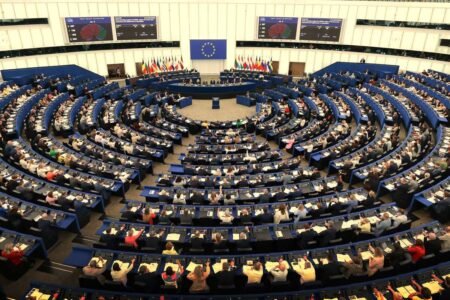
    EU Parliament green light for consumers to defend their rights collectively

    Image by Varun

    (STRASBOURG) – Groups of consumers will be able to join forces and launch collective action in the EU, following the final green light from MEPs Tuesday to EU-wide rules for the protection of collective interest of consumers.

    The new rules introduce a harmonised model for representative action in all member states that guarantees consumers are well protected against mass harm, while ensuring appropriate safeguards to avoid abusive lawsuits.

    All member states will have to put in place at least one effective procedural mechanism that allows qualified entities (e.g. consumer organisations or public bodies) to bring lawsuits to court for the purpose of injunction (ceasing or prohibiting) or redress (compensation). This legislation aims to improve the functioning of the internal market by stopping illegal practices and facilitating access to justice for consumers.

    The European class action model will allow only qualified entities, such as consumer organisations, to represent groups of consumers and bring lawsuits to court, instead of law firms.

    In order to bring cross-border actions to court, qualified entities will have to comply with the same criteria across the EU. They will have to prove that they have a certain degree of stability and be able to demonstrate their public activity, and that they are a non-profit organisation. For domestic actions, entities will have to fulfil the criteria set out in national laws.

    The rules also introduce strong safeguards against abusive lawsuits by using the “loser pays principle”, which ensures that the defeated party pays the costs of the proceedings of the successful party.

    To further prevent representative actions from being misused, punitive damages should be avoided. Qualified entities should also establish procedures to avoid conflict of interest and external influence, namely if they are funded by a third party.

    Collective actions can be brought against traders if they have allegedly violated EU law in a broad range of areas such as data protection, travel and tourism, financial services, energy and telecommunication.

    Finally, the directive also covers infringements that have stopped before the representative action is brought or concluded, since the practice might still need to be banned to prevent it from recurring.

    The directive will enter into force 20 days following its publication in the Official Journal of the EU. Member states will then have 24 months to transpose the directive into their national laws, and an additional six months to apply it.

    Further information, European Parliament

    Procedure file

    Final agreed text – Council position at first reading (06/11/2020)

    Add A Comment
    Leave A Reply Cancel Reply

    You must be logged in to post a comment.

    nps
    • Website

    Related Content

    House sparrow - Photo by Alexas Fotos on Pexels

    Brussels issues guidance for ‘more balanced’ rules on protecting wild birds

    Bankruptcy - Image by Michael Schüller from Pixabay

    EU Council greenlights common EU rules for insolvency proceedings

    European-made armoured vehicles - Photo © European Union 2025

    Brussels EUR 1.5 bn work programme to boost European and Ukrainian defence industry

    EU agenda - Image by Andreas Lischka from Pixabay

    EU Agenda: Week Ahead – 30 March-4 April 2026

    Euro coins and notes - Photo by Pixabay

    Eurozone Economic Calendar

    Trade port cargo - Image by Pexels from Pixabay

    Landmark deal for reform of EU Customs Union

    LATEST EU NEWS
    House sparrow - Photo by Alexas Fotos on Pexels

    Brussels issues guidance for ‘more balanced’ rules on protecting wild birds

    1 April 2026
    Bankruptcy - Image by Michael Schüller from Pixabay

    EU Council greenlights common EU rules for insolvency proceedings

    30 March 2026
    European-made armoured vehicles - Photo © European Union 2025

    Brussels EUR 1.5 bn work programme to boost European and Ukrainian defence industry

    30 March 2026
    Trade port cargo - Image by Pexels from Pixabay

    Landmark deal for reform of EU Customs Union

    27 March 2026
    E-commerce - Photo by Antoni Shkraba Studio on Pexels

    1 in 3 online traders in Europe incorrectly displayed discounts on Black Friday and Cyber Monday

    26 March 2026

    Subscribe to EUbusiness Week

    Get the latest EU news

    CONTACT INFO

    • EUbusiness, 117 High Street, Chesham Buckinghamshire, HP5 1DE, United Kingdom
    • +44(0)20 8058 8232
    • service@eubusiness.com

    INFORMATION

    • About Us
    • Advertising
    • Contact Info

    Services

    • Cookie Policy
    • Terms
    • Disclaimer

    SOCIAL MEDIA

    Facebook
    eubusiness.com © EUbusiness Ltd 2026

    Type above and press Enter to search. Press Esc to cancel.

    Manage Consent
    To provide the best experiences, we use technologies like cookies to store and/or access device information. Consenting to these technologies will allow us to process data such as browsing behavior or unique IDs on this site. Not consenting or withdrawing consent, may adversely affect certain features and functions.
    Functional Always active
    The technical storage or access is strictly necessary for the legitimate purpose of enabling the use of a specific service explicitly requested by the subscriber or user, or for the sole purpose of carrying out the transmission of a communication over an electronic communications network.
    Preferences
    The technical storage or access is necessary for the legitimate purpose of storing preferences that are not requested by the subscriber or user.
    Statistics
    The technical storage or access that is used exclusively for statistical purposes. The technical storage or access that is used exclusively for anonymous statistical purposes. Without a subpoena, voluntary compliance on the part of your Internet Service Provider, or additional records from a third party, information stored or retrieved for this purpose alone cannot usually be used to identify you.
    Marketing
    The technical storage or access is required to create user profiles to send advertising, or to track the user on a website or across several websites for similar marketing purposes.
    • Manage options
    • Manage services
    • Manage {vendor_count} vendors
    • Read more about these purposes
    View preferences
    • {title}
    • {title}
    • {title}

    Sign In or Register

    Welcome Back!

    Login to your account below.

    Lost password?