Close Menu
    Latest Category
    • Finance
    • Tech
    • EU Law
    • Energy
    • About
    • Contact
    EUbusiness.com | EU news, business and politicsEUbusiness.com | EU news, business and politics
    Login
    • EU News
    • Focus
    • Guides
    • Press
    • Jobs
    • Events
    • Directory
    EUbusiness.com | EU news, business and politicsEUbusiness.com | EU news, business and politics
    Home » Brussels moves to end seasonal clock changes in Europe

    Brussels moves to end seasonal clock changes in Europe

    npsnps12 September 2018
    — Filed under: Agriculture EU News Headline2 Living & Working in EU
    Share
    Facebook Twitter LinkedIn Pinterest Email
    Brussels moves to end seasonal clock changes in Europe

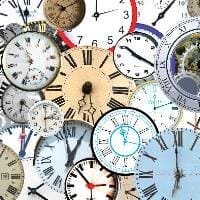
    Clocks

    (STRASBOURG) – The EU Commission proposed Wednesday to end seasonal clock changes in Europe in 2019, with Member States free to decide once and for all whether they want to permanently apply summer- or wintertime.

    The Commission’s proposal:

    • puts an end to seasonal clock changes for the entire European Union;
    • sets out a clear and short timetable for the changes to take effect;
    • encourages consultation at national and European levels, to ensure a coordinated approach among Member States.

    How and when would these changes become effective?

    The European Commission’s proposal will now go to the European Parliament and the Council for their agreement.

    To allow for a smooth transition, under the Commission’s proposal each Member State would notify by April 2019 whether it intends to apply permanent summer- or wintertime. The last mandatory change to summertime would take place on Sunday 31 March 2019. After this, the Member States wishing to permanently switch back to wintertime would still be able to make one last seasonal clock change on Sunday 27 October 2019. Following that date, seasonal clock changes would no longer be possible.

    This timeline is conditional on the European Parliament and the Council adopting the Commission’s proposal by March 2019 at the latest.

    Why is the Commission proposing this change?

    European countries introduced summertime arrangements in the last century to save energy, particularly in times of war or during the oil crisis of the 1970s. Starting in 1980, the European Union gradually adopted legislation putting an end to the diverging schedules of the national clock changes. In 2018 however, the purpose of clock changes has become much less relevant, with studies suggesting that energy savings are now marginal and citizens increasingly complaining about negative health impacts.

    Clock changes have indeed been increasingly questioned by citizens, by the European Parliament and by a growing number of Member States. Building upon the request of the European Parliament, and as part of an assessment of the current arrangements, the Commission held a public consultation in summer 2018 which received 4.6 million responses, the highest number ever received in any public consultation organised by the European Commission. 84% of respondents were in favour of ending seasonal clock changes.

    In light of these elements, the Commission concluded that there is no point for Brussels to keep regulating seasonal time changes and that Member States should be free to decide whether they want to be in summertime or wintertime and handle the matter at national level, in accordance with the principle of subsidiarity.

    Website on the State of the European Union 2018

    Subpage on Seasonal Clock Changes

    Commission proposal to put an end to seasonal clock changes - background guide

    Add A Comment
    Leave A Reply Cancel Reply

    You must be logged in to post a comment.

    nps
    • Website

    Related Content

    Casino - Image by Mariakray from Pixabay

    How Is Business Looking for Netherlands iGaming Brands? Compared to Other Key EU Countries

    Single market - lorry delivery - Image by Maickel Althuizen from Pixabay

    Better regulation starts with putting the ‘Think Small First’ principle into practice

    Sponsor: SMEunited30 April 2026
    Sustainable finance - Image by Nattanan Kanchanaprat from Pixabay

    Largest companies in France still unprepared for nature transition, finds WWF

    Sponsor: WWF30 April 2026
    Fishing boat

    EU Fisheries Policy evaluation confirms the framework works – now Member States must deliver

    Sponsor: WWF30 April 2026
    Mercosur signing - Maros Sefcovic - Photo © European Union 2026

    EU-Mercosur interim trade deal to enter into provisional application

    Justice law hammer - Image by succo from Pixabay

    April 2026 EU infringements package: key decisions

    LATEST EU NEWS
    Mercosur signing - Maros Sefcovic - Photo © European Union 2026

    EU-Mercosur interim trade deal to enter into provisional application

    30 April 2026
    Pet dog at vet - Image by Tima Miroshnichenko on Pexels

    Green light for first EU rules to protect cats and dogs

    28 April 2026
    Rice sacks trade - Image by Thilina Alagiyawanna on Pexels

    Renewed EU trade instrument for development set for 2027

    28 April 2026
    Artificial intelligence - Image by Kohji Asakawa from Pixabay

    Brussels consults on Google measures to give Android users choice on AI services

    28 April 2026
    Car crash - Image by Rico Lob from Pixabay

    Road fatalities in the EU down 2.2 pct in 2024

    27 April 2026

    Subscribe to EUbusiness Week

    Get the latest EU news

    CONTACT INFO

    • EUbusiness, 117 High Street, Chesham Buckinghamshire, HP5 1DE, United Kingdom
    • +44(0)20 8058 8232
    • service@eubusiness.com

    INFORMATION

    • About Us
    • Advertising
    • Contact Info

    Services

    • Cookie Policy
    • Terms
    • Disclaimer

    SOCIAL MEDIA

    Facebook
    eubusiness.com © EUbusiness Ltd 2026

    Type above and press Enter to search. Press Esc to cancel.

    Manage Consent
    To provide the best experiences, we use technologies like cookies to store and/or access device information. Consenting to these technologies will allow us to process data such as browsing behavior or unique IDs on this site. Not consenting or withdrawing consent, may adversely affect certain features and functions.
    Functional Always active
    The technical storage or access is strictly necessary for the legitimate purpose of enabling the use of a specific service explicitly requested by the subscriber or user, or for the sole purpose of carrying out the transmission of a communication over an electronic communications network.
    Preferences
    The technical storage or access is necessary for the legitimate purpose of storing preferences that are not requested by the subscriber or user.
    Statistics
    The technical storage or access that is used exclusively for statistical purposes. The technical storage or access that is used exclusively for anonymous statistical purposes. Without a subpoena, voluntary compliance on the part of your Internet Service Provider, or additional records from a third party, information stored or retrieved for this purpose alone cannot usually be used to identify you.
    Marketing
    The technical storage or access is required to create user profiles to send advertising, or to track the user on a website or across several websites for similar marketing purposes.
    • Manage options
    • Manage services
    • Manage {vendor_count} vendors
    • Read more about these purposes
    View preferences
    • {title}
    • {title}
    • {title}

    Sign In or Register

    Welcome Back!

    Login to your account below.

    Lost password?