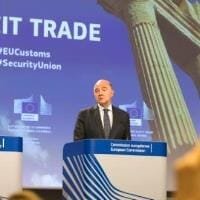
Pierre Moscovici – Photo EC
(BRUSSELS) – The EU Commission put forward Thursday new rules to clamp down on the illegal import and trafficking of cultural goods from outside the EU, often linked to terrorist financing and other criminal activity.
The Commission says this latest step in its action plan to strengthen the fight against terrorism financing will stop the traffic in its tracks by banning the import into the EU of cultural goods exported illegally from their home countries. It comes days after the Hamburg G20 called on countries to tackle terrorist finance, including the looting and smuggling of antiquities.
A string of crimes against our common cultural heritage have been perpetrated by warring factions and terrorist entities all over the world. Recent reports have also shown that valuable artworks, sculptures and archaeological artefacts are being sold and imported into the EU from certain non-EU countries, with those profits potentially used to finance terrorist activities.
“The illegal trafficking of cultural goods is an issue of grave concern,” says Economic and Financial Affairs Commissioner Pierre Moscovici: “Such activity can wreak serious damage on the cultural heritage of those countries that can least afford to protect their interests. Today’s proposal equips customs authorities with the right tools to ensure the EU market is closed for such goods.”
At the moment, the EU applies prohibitions on goods from Iraq and Syria but there is no general EU framework for the import of cultural goods. Current rules can be exploited by unscrupulous exporters and importers who can use the profits to fund illegal activities such as terrorism. Diverging and ineffective existing national legislation in this area means that EU action is necessary to ensure consistent treatment of imports of cultural goods all along the EU’s external borders. This will help prevent illicit cultural goods being brought into the EU, directly weakening the cultural, historical and archaeological life of the country of origin.
The new rules foresee a number of actions which should ensure that the importation of illicit cultural goods becomes much more difficult in the future:
- A new common EU definition for ‘cultural goods’ at importation which covers a broad range of objects including archaeological finds, ancient scrolls, the remains of historical monuments, artwork, collections and antiques. The new rules will apply only to cultural goods that have been shown to be most at risk, i.e. those at least 250 years old at the moment of importation;
- The introduction of a new licensing system for the import of archaeological objects, parts of monuments and ancient manuscripts and books. Importers will have to obtain import licences from the competent authorities in the EU before bringing such goods into the EU;
- For other categories of cultural goods, importers will now have to go through a more rigorous certification system by submitting a signed statement or affidavit as proof that the goods have been exported legally from the third country.
- Customs authorities will also have the power to seize and retain goods when it cannot be demonstrated that the cultural goods in question have been legally exported.
Awareness campaigns targeting buyers of cultural goods, such as professional art market importers but also buyers of cultural goods in Europe are envisaged. In parallel, training sessions for customs officers and other law enforcement services will be organised by Member States in order to improve their ability to recognise suspicious shipments and to co-operate more efficiently in preventing illicit trade.
EU Member States will be obliged to ensure that effective, proportionate and dissuasive penalties are in place for those who do not follow the rules, in particular for anyone who makes false statements or submits false information.
The proposal for a Regulation will now be submitted to the European Parliament and the Council of the EU. The Commission hopes that this will be swiftly adopted in the co-decision process
Q&A on new proposal to fight illicit trade in cultural goods
Commission webpage on the new proposal to fight illicit trade in cultural goods