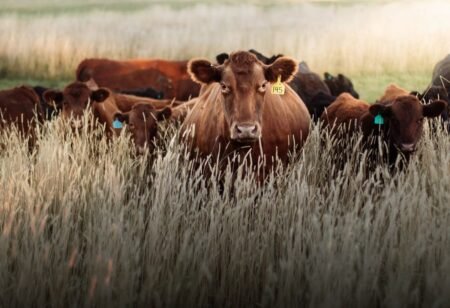


With over 56 % of the population in the 27 Member States of the European Union (EU) living in rural areas, which cover 91 % of the territory, rural development is a vitally important policy area. Farming and forestry remain crucial for land use and the management of natural resources in the EU’s rural areas, and as a platform for economic diversification in rural communities. The strengthening of EU rural development policy is, therefore, an overall EU priority.
Advertisement
Why have a rural development policy?
The European Union has an active rural development policy because this helps us to achieve valuable goals for our countryside and for the people who live and work there.
The EU’s rural areas are a vital part of its physical make-up and its identity. According to a standard definition, more than 91 % of the territory of the EU is “rural”, and this area is home to more than 56 % of the EU’s population. Furthermore, the EU’s fantastic range of striking and beautiful landscapes are among the things that give it its character from mountains to steppe, from great forests to rolling fields.
Many of our rural areas face significant challenges. Some of our farming and forestry businesses still need to build their competitiveness. More generally, average income per head is lower in rural regions than in our towns and cities, while the skills base is narrower and the service sector is less developed. Also, caring for the rural environment often carries a financial cost.
On the other hand, the European countryside has a great deal to offer. It gives us essential raw materials. Its value as a place of beauty, rest and recreation when we look after it is self-evident. It acts as our lungs, and is therefore a battleground for the fight against climate change. And many people are attracted by the idea of living and/or working there, provided that they have access to adequate services and infrastructure.
This means that the EU’s Lisbon Strategy for jobs and growth, and its Göteborg Strategy for sustainable development, are just as relevant to our countryside as to our towns and cities.
The EU’s rural development policy is all about meeting the challenges faced by our rural areas, and unlocking their potential.
Why have a common rural development policy?
Theoretically, individual EU Member States could decide and operate completely independent rural development policies. However, this approach would work poorly in practice. Not all countries in the EU would be able to afford the policy which they needed. Moreover, many of the issues addressed through rural development policy do not divide up neatly at national or regional boundaries, but affect people further afield (for example, pollution crosses borders all too easily; and more generally, environmental sustainability has become a European and international concern). Also, rural development policy has links to a number of other policies set at EU level.
Therefore, the EU has a common rural development policy, which nonetheless places considerable control in the hands of individual Member States and regions.
The policy is funded partly from the central EU budget and partly from individual Member States’ national or regional budgets.
Structure of rural development policy
The essential rules governing rural development policy for the period 2007 to 2013, as well as the policy measures available to Member States and regions, are set out in Council Regulation (EC) No. 1698/2005.
Under this Regulation, rural development policy for 2007 to 2013 is focused on three themes (known as “thematic axes”). These are:
- improving the competitiveness of the agricultural and forestry sector;
- improving the environment and the countryside;
- improving the quality of life in rural areas and encouraging diversification of the rural economy.
To help ensure a balanced approach to policy, Member States and regions are obliged to spread their rural development funding between all three of these thematic axes.
A further requirement is that some of the funding must support projects based on experience with the Leader Community Initiatives. The “Leader approach” to rural development involves highly individual projects designed and executed by local partnerships to address specific local problems.
As before 2007, every Member State (or region, in cases where powers are delegated to regional level) must set out a rural development programme, which specifies what funding will be spent on which measures in the period 2007 to 2013.
A new feature for 2007 to 2013 is a greater emphasis on coherent strategy for rural development across the EU as a whole. This is being achieved through the use of National Strategy Plans which must be based on EU Strategic Guidelines.
This approach should help to:
- identify the areas where the use of EU support for rural development adds the most value at EU level;
- make the link with the main EU priorities (for example, those set out under the Lisbon and Göteborg agendas);
- ensure consistency with other EU policies, in particular those for economic cohesion and the environment;
- assist the implementation of the new market-oriented CAP and the necessary restructuring it will entail in the old and new Member States.
Source: European Commission