Close Menu
    Latest Category
    • Finance
    • Tech
    • EU Law
    • Energy
    • About
    • Contact
    EUbusiness.com | EU news, business and politicsEUbusiness.com | EU news, business and politics
    Login
    • EU News
    • Focus
    • Guides
    • Press
    • Jobs
    • Events
    • Directory
    EUbusiness.com | EU news, business and politicsEUbusiness.com | EU news, business and politics
    Home » EU’s Schengen visa process set to go digital

    EU’s Schengen visa process set to go digital

    npsBy nps27 April 2022 No Comments3 Mins Read
    — Filed under: EU News Headline1 Living & Working in EU Tourism
    Share
    Facebook Twitter LinkedIn Pinterest Email
    EU's Schengen visa process set to go digital

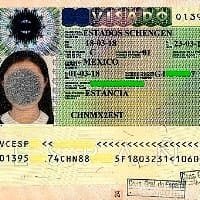
    Schengen visa – Photo by ButcherC via Wikimedia Commons

    (BRUSSELS) – The Schengen visa process is set to be replaced by a visa sticker, following an EU proposal Wednesday which introduces the possibility to submit visa applications online through the European online visa platform.

    The ‘New Pact on Migration and Asylum’ set an objective to fully digitalise visa procedures by 2025. This is now seen as an opportunity to effectively improve the visa application process by reducing the costs and the burden on the Member States as well as the applicants, while also improving the security of the Schengen area.

    The aim of the proposal is to harmonise and unify visa application procedures within the Schengen area, where it currently differs between Schengen countries.

    Harmonising and unifying visa application procedures within the Schengen area will help to avoid so called ‘visa shopping’ by applicants who may be tempted to lodge an application with a Schengen country that offers faster visa application processing than with a country that is actually their destination. The digitalisation of the visa process will also reduce security risks posed by the physical visa stickers, which could still be prone to falsification, fraud and theft.

    Through digitalisation, applying for a Schengen visa will become easier and the visa itself will be more secure:

    • Visa applicants will be able to apply for a visa online, including paying the visa fee through a single EU platform, regardless of the Schengen country they want to visit;
    • The platform will automatically determine which Schengen country is responsible for examining an application, in particular when the applicant intends to visit several Schengen countries;
    • The platform will provide applicants with up-to-date information on Schengen short-stay visas, as well as all necessary information regarding the requirements and procedures (such as supporting documents, visa fee or the need for an appointment to collect biometric identifiers);
    • Appearing in person at the consulate would only be mandatory for first time applicants for the collection of biometric identifiers, for applicants whose biometric data are no longer valid or those with a new travel document;
    • The visa will include state-of-the-art security features, which will be more secure than the current visa sticker;
    • The new system will ensure that fundamental rights are always protected.

    The Commission proposal will now be discussed by the European Parliament and the Council. Member States will have then five years to switch to the common online visa platform.

    Based on the outcome of the negotiations between the co-legislators, the development of the platform could start in 2024 and become operational in 2026. Considering the five-year transition period, all Member States could use the platform in 2031.

    Communication

    Digitalisation of Schengen Visa process - guide

    Factsheet

    Add A Comment
    Leave A Reply Cancel Reply

    You must be logged in to post a comment.

    nps
    • Website

    Related Content

    Oil tanker - Image by Erich Westendarp from Pixabay

    New EU mechanism to lower price cap for Russian crude oil to $44,10 per barrel

    Robot doctor - Image by Thomas Meier from Pixabay

    EU launches EUR 307m artificial intelligence and related technologies calls

    Farm flooded with cows - Image by Brigitte Werner from Pixabay

    Climate and nature risks threaten Europe’s financial resilience and insurability – WWF report

    Sponsor: WWF15 January 2026
    Valdis Dombrovskis - Photo © European Union 2026

    Brussels presents 2026–2027 financial support package for Ukraine

    Renewable energy - Image by Maria Maltseva from Pixabay

    Nearly 50pct EU electricity came from renewables in 2024

    Olives - Image by Marco Centenaro from Pixabay

    EU’s checks on olive oil need tightening up: auditors’ report

    LATEST EU NEWS
    Oil tanker - Image by Erich Westendarp from Pixabay

    New EU mechanism to lower price cap for Russian crude oil to $44,10 per barrel

    15 January 2026
    Robot doctor - Image by Thomas Meier from Pixabay

    EU launches EUR 307m artificial intelligence and related technologies calls

    15 January 2026
    Valdis Dombrovskis - Photo © European Union 2026

    Brussels presents 2026–2027 financial support package for Ukraine

    14 January 2026
    Renewable energy - Image by Maria Maltseva from Pixabay

    Nearly 50pct EU electricity came from renewables in 2024

    14 January 2026
    Olives - Image by Marco Centenaro from Pixabay

    EU’s checks on olive oil need tightening up: auditors’ report

    14 January 2026

    Subscribe to EUbusiness Week

    Get the latest EU news

    CONTACT INFO

    • EUbusiness, 117 High Street, Chesham Buckinghamshire, HP5 1DE, United Kingdom
    • +44(0)20 8058 8232
    • service@eubusiness.com

    INFORMATION

    • About Us
    • Advertising
    • Contact Info

    Services

    • Privacy Policy
    • Terms
    • EU News

    SOCIAL MEDIA

    Facebook
    eubusiness.com © EUbusiness Ltd 2026

    Type above and press Enter to search. Press Esc to cancel.

    Sign In or Register

    Welcome Back!

    Login to your account below.

    Lost password?