Every year, Coachella does something that few cultural events manage at scale: it moves markets. Not just in music or fashion, but in the quieter, more consequential world of brand procurement. As the 2026 edition takes shape, a pattern is emerging among sponsors and merchandise distributors that deserves attention from anyone managing event marketing budgets in Europe and beyond.

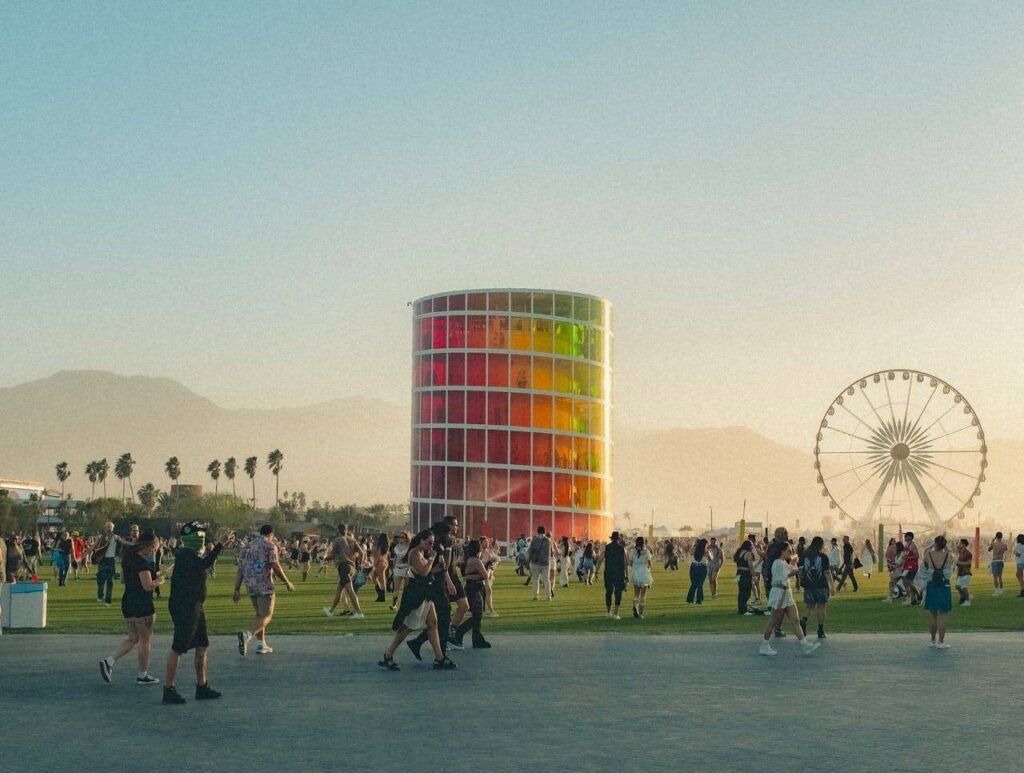
The shift is straightforward on the surface – demand for sustainable, reusable merchandise is up – but the reasons behind it are more structural than they first appear.
From goodwill gesture to baseline expectation
For most of the last decade, sustainable merchandise sat comfortably in the CSR column: a visible gesture, appreciated but optional. That framing is no longer accurate. At large-scale events where environmental footprint is under active public scrutiny, the materials a brand chooses to put its logo on are read as a direct signal of its values.
Coachella 2026 trends confirm what procurement teams are already sensing: festival-goers – particularly in the 25-40 demographic that dominates attendance – are not neutral about single-use branded items. They notice. And increasingly, they document what they notice on social media, for better or worse.
The practical consequence is that eco-friendly accessories have moved from optional upgrade to procurement standard for serious sponsors.
Why natural fibres are winning the format war
The aesthetic logic of Coachella has always leaned towards natural textures – earthy tones, utilitarian silhouettes, the visual language of the desert. What has changed is that this aesthetic now aligns almost perfectly with the materials that sustainable production demands: jute, cotton, juco. The convergence is not accidental, and for brands it removes a friction that previously complicated sustainable sourcing – the fear that “eco” meant compromising on visual appeal.
A well-designed jute or cotton tote fits the festival environment as naturally as it fits a weekend market or an airport terminal. That cross-context usability is precisely what gives it long-term marketing value.
The ROI case for reusable totes at scale
The business argument for investing in sustainable festival bags in bulk has strengthened considerably heading into 2026. The logic runs across three levels.
First, longevity. A durable natural fibre bag remains in active use for years after the event, generating brand impressions that no disposable alternative can match. The cost-per-impression calculation, run honestly, tends to favour quality reusables by a significant margin.
Second, organic reach. At an event as visually driven as Coachella, branded items that are well-designed and materially credible become part of the attendee’s outfit – and by extension, their content. Bags with distinctive design or socially conscious messaging circulate on social media without additional spend. This is not a theoretical benefit; it is a documented pattern across recent festival seasons.
Third, operational impact. High-capacity reusable tote bags increase the ease with which attendees carry purchased merchandise across large grounds. The effect on per-head vendor spend is modest but consistent – and at festival scale, modest improvements compound quickly.
What this means for procurement in practice
The challenge for European brands and distributors is not recognising the shift – most already have – but acting on it early enough to avoid supply chain constraints. Natural fibre products sourced at festival scale require longer lead times than standard promotional merchandise, and quality consistency across high volumes is harder to guarantee without specialist suppliers.
For the 2026 season, procurement managers working on event strategies would do well to treat sustainable merchandise not as a line item to be optimised at the end of the planning cycle, but as a foundational decision made early. The brands locking in supply now are not paying a premium for sustainability – they are avoiding the premium that last-minute sourcing always extracts.
The wider signal
Coachella has a reliable history as an early indicator of where mainstream consumer culture is heading. What festival fashion 2026 is signalling – through the growing dominance of natural materials, reusable formats, and design-led branded merchandise – is a consumer base that has internalised environmental accountability as a purchasing filter, not a bonus feature.
For brands that have been treating sustainable merchandise as aspirational, the 2026 festival season is a reasonable deadline to treat it as standard.