Close Menu
    Latest Category
    • Finance
    • Tech
    • EU Law
    • Energy
    • About
    • Contact
    EUbusiness.com | EU news, business and politicsEUbusiness.com | EU news, business and politics
    Login
    • EU News
    • Focus
    • Guides
    • Press
    • Jobs
    • Events
    • Directory
    EUbusiness.com | EU news, business and politicsEUbusiness.com | EU news, business and politics
    Home » After Dieselgate: Europe’s car type approval rules tightened

    After Dieselgate: Europe’s car type approval rules tightened

    npsnps23 April 2018
    — Filed under: Cars EU News Headline2
    Share
    Facebook Twitter LinkedIn Pinterest Email
    After Dieselgate: Europe's car type approval rules tightened

    (BRUSSELS) – Stronger supervision of the European car approval system was voted in by the EU Parliament Thursday, giving the Commission the power to make sure manufacturers are no longer able to cheat on emissions.

    The new regulation clarifies the responsibilities of national type approval authorities, testing centres and market surveillance bodies, in order to make them more independent and prevent conflicts of interest.

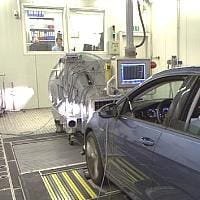
    Type approval is the process whereby national authorities certify that a vehicle model meets all EU safety, environmental and production requirements before it can be placed on the market. To be approved, a vehicle type must be tested for several requirements, for instance, with regard to safety (lights, brakes, stability or performance in case of accident), environment (e.g. emissions) or specific parts (for example, seats or interior fittings).

    The Commission welcomed the vote. “The new rules will give us cleaner cars on our way to zero emission and safer cars for the roll-out of autonomous driving,” said Commissioner for the Internal Market Elzbieta Bienkowska.

    “This is a strong Europe-wide response to the ‘Dieselgate’ scandal,” said Parliament’s rapporteur Daniel Dalton MEP: “This legislation will make cars safer and cleaner and, combined with the Real Driving Emissions testing, will ensure that a future ‘Dieselgate’ can’t happen again. (…) It delivers for car owners, for the environment and for manufacturers, with standards fairly applied and appropriately applied across the board.”

    The regulation requires every EU country to conduct a minimum number of checks on cars each year, i.e. at least one for every 40,000 new motor vehicles registered in that member state in the preceding year. At least 20% of these tests will have to be emissions-related. For countries with a low number of car registrations, there will be a minimum of five tests to be conducted.

    The Commission will also be able to carry out tests and inspections of vehicles to verify compliance, to trigger EU-wide recalls and to impose administrative fines on car makers of up to €30 000 per non-compliant vehicle.

    The legislation introduces a new testing regime to ensure cars remain within emission limits throughout their lifetime. The testing centres (so-called “technical services”) will be regularly and independently audited.

    Car owners will be reimbursed if they make repairs on vehicles to fix issues later subject to a manufacturer’s recall, and independent garages will have access to relevant information on vehicles to be able to compete with dealers and help drive down prices.

    The regulation needs to be formally adopted by the other co-legislator, the EU Council. The new rules will be applicable from 1 September 2020.

    Further information, European Parliament

    Adopted text: Regulation on the approval and market surveillance of motor vehicles

    Procedure file

    Add A Comment
    Leave A Reply Cancel Reply

    You must be logged in to post a comment.

    nps
    • Website

    Related Content

    Putin - Image by svklimkin from Pixabay

    Brussels renews support for exiled and relocated journalists in the EU

    EU agenda - Image by Andreas Lischka from Pixabay

    EU Agenda: Week Ahead – 23-29 March 2026

    European Council - Photo © European Union 2026

    EU leaders manage to avoid shooting themselves in the foot

    Sponsor: WWF21 March 2026
    Teaching online - Photo by Wes Hicks on Unsplash

    TEFL and EU Labour Mobility: A Practical Route to Work and Travel

    Euro coins and notes - Photo by Pixabay

    Eurozone Economic Calendar

    Renewable energy - Image by Maria Maltseva from Pixabay

    47 pct of EU’s electricity came from renewables in 2025

    LATEST EU NEWS
    Putin - Image by svklimkin from Pixabay

    Brussels renews support for exiled and relocated journalists in the EU

    23 March 2026
    Renewable energy - Image by Maria Maltseva from Pixabay

    47 pct of EU’s electricity came from renewables in 2025

    19 March 2026
    Henna Virkkunen - Photo © European Union 2026

    EU Inc. to boost startups and growth in Europe

    18 March 2026
    Bioeconomy - farmer ploughing field - Photo by Frank Molter © European Union 2017

    EU adopts strategy for sustainable bioeconomy

    17 March 2026
    Cargo Ship on Rhine River - Photo by Wolfgang Vrede on Pexels

    New state aid rules to boost sustainable transport in EU

    16 March 2026

    Subscribe to EUbusiness Week

    Get the latest EU news

    CONTACT INFO

    • EUbusiness, 117 High Street, Chesham Buckinghamshire, HP5 1DE, United Kingdom
    • +44(0)20 8058 8232
    • service@eubusiness.com

    INFORMATION

    • About Us
    • Advertising
    • Contact Info

    Services

    • Cookie Policy
    • Terms
    • Disclaimer

    SOCIAL MEDIA

    Facebook
    eubusiness.com © EUbusiness Ltd 2026

    Type above and press Enter to search. Press Esc to cancel.

    Manage Consent
    To provide the best experiences, we use technologies like cookies to store and/or access device information. Consenting to these technologies will allow us to process data such as browsing behavior or unique IDs on this site. Not consenting or withdrawing consent, may adversely affect certain features and functions.
    Functional Always active
    The technical storage or access is strictly necessary for the legitimate purpose of enabling the use of a specific service explicitly requested by the subscriber or user, or for the sole purpose of carrying out the transmission of a communication over an electronic communications network.
    Preferences
    The technical storage or access is necessary for the legitimate purpose of storing preferences that are not requested by the subscriber or user.
    Statistics
    The technical storage or access that is used exclusively for statistical purposes. The technical storage or access that is used exclusively for anonymous statistical purposes. Without a subpoena, voluntary compliance on the part of your Internet Service Provider, or additional records from a third party, information stored or retrieved for this purpose alone cannot usually be used to identify you.
    Marketing
    The technical storage or access is required to create user profiles to send advertising, or to track the user on a website or across several websites for similar marketing purposes.
    • Manage options
    • Manage services
    • Manage {vendor_count} vendors
    • Read more about these purposes
    View preferences
    • {title}
    • {title}
    • {title}

    Sign In or Register

    Welcome Back!

    Login to your account below.

    Lost password?