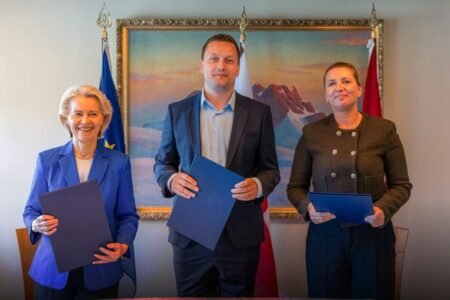
Dimitris Avramopoulos – Photo EC
(BRUSSELS) – Investor citizenship and residence schemes operated by some European states imply a number of risks for the EU, including money laundering, tax evasion and corruption, says an EU report Wednesday.
A new report report maps the existing practices and identifies certain risks such schemes imply for the EU, in particular, as regards security, money laundering, tax evasion and corruption. A lack of transparency in how the schemes are operated and a lack of cooperation among Member States further exacerbate these risks, the report finds.
“Legally residing in the EU and in the Schengen area comes with rights and privileges that should not be abused,” said the Commissioner for Home Affairs and Citizenship Dimitris Avramopoulos: “Member States must at all times fully respect and apply existing obligatory checks and balances and national investor residence schemes should not be exempt from that.”
Investor Citizenship Schemes (‘golden passports’)
In the EU, three Member States (Bulgaria, Cyprus and Malta) currently operate schemes that grant investors the nationality of these countries under conditions which are less strict than ordinary naturalisation regimes. In these three Member States, there is no obligation of physical residence for the individual, nor a requirement of other genuine connections with the country before obtaining citizenship.
These schemes are of common EU interest since every person that acquires the nationality of a Member State will simultaneously acquire Union citizenship. The decision by one Member State to grant citizenship in return for investment, automatically gives rights in relation to other Member States, in particular free movement and access to the EU internal market to exercise economic activities as well as a right to vote and be elected in European and local elections. In practice, these schemes are often advertised as a means of acquiring Union citizenship, together with all the rights and privileges associated with it.
The Commission’s report has identified the following areas of concern:
- Security: checks run on applicants are not sufficiently robust and the EU’s own centralised information systems, such as the Schengen Information System (SIS), are not being used as systematically as they should be;
- Money laundering: enhanced checks (‘due diligence’) are necessary to ensure that rules on anti-money laundering are not circumvented;
- Tax evasion: monitoring and reporting is necessary to make sure that individuals do not take advantage of these schemes to benefit from privileged tax rules;
- Transparency and information: The report finds a lack of clear information on how the schemes are run, including on the number of applications received, granted or rejected and the origins of the applicants. In addition, Member States do not exchange information on applicants for such schemes, nor do they inform each other of rejected applicants.
Investor Residence Schemes (‘golden visas’)
Investor residence schemes, while different from citizenship schemes in the rights they grant, pose equally serious security risks to Member States and the EU as a whole. A valid residence permit gives a third-country national the right to reside in the Member State in question, but also to travel freely in the Schengen area. While EU law regulates the entry conditions for certain categories of third-country nationals, the granting of investor residence permits is currently not regulated at EU level and remains a national competence. Currently, 20 Member States run such schemes: Bulgaria, Czechia, Estonia, Ireland, Greece, Spain, France, Croatia, Italy, Cyprus, Latvia, Lithuania, Luxembourg, Malta, Netherlands, Poland, Portugal, Romania, Slovakia and the United Kingdom. The Commission’s report has identified the following areas of concern:
- Security checks: There are certain security obligations under EU law that must be carried out before issuing a visa or residence permit to foreign investors. However, there is a lack of available information on the practical implementation and discretion in the way that Member States approach security concerns;
- Physical residence requirement: Residence permits obtained by investment, with limited or no required physical presence of the investor in the Member State in question, could have an impact on the application of and rights associated with the EU Long-Term Residence Status, and may even provide a fast-track to national and thereby EU citizenship;
- Lack of transparency: The report stresses a lack of transparency and oversight of the schemes, in particular in terms of monitoring and the absence of statistics on how many people obtain a residence permit through such a scheme.
The Commission will now monitor wider issues of compliance with EU law raised by investor citizenship and residence schemes and it will take necessary action as appropriate. For this reason, it says Member States need to ensure, in particular, that: all obligatory border and security checks are systematically carried out; the requirements of the Long-Term Residence Permit Directive and the Family Reunification Directive are properly complied with; funds paid by investor citizenship and residence applicants are assessed according to the EU anti-money laundering rules; In the context of tax avoidance risks, there are tools available in the EU framework for administrative cooperation, in particular for exchange of information.
Commission report on investor citizenship and residence schemes in the EU
Report on Investor Citizenship and Residence Schemes in the European Union - background guide