With the EU economy on the road to gradual recovery, the EU set out plans Tuesday for reforms and investments to lay foundations for long-term economic stability and sustainable growth.
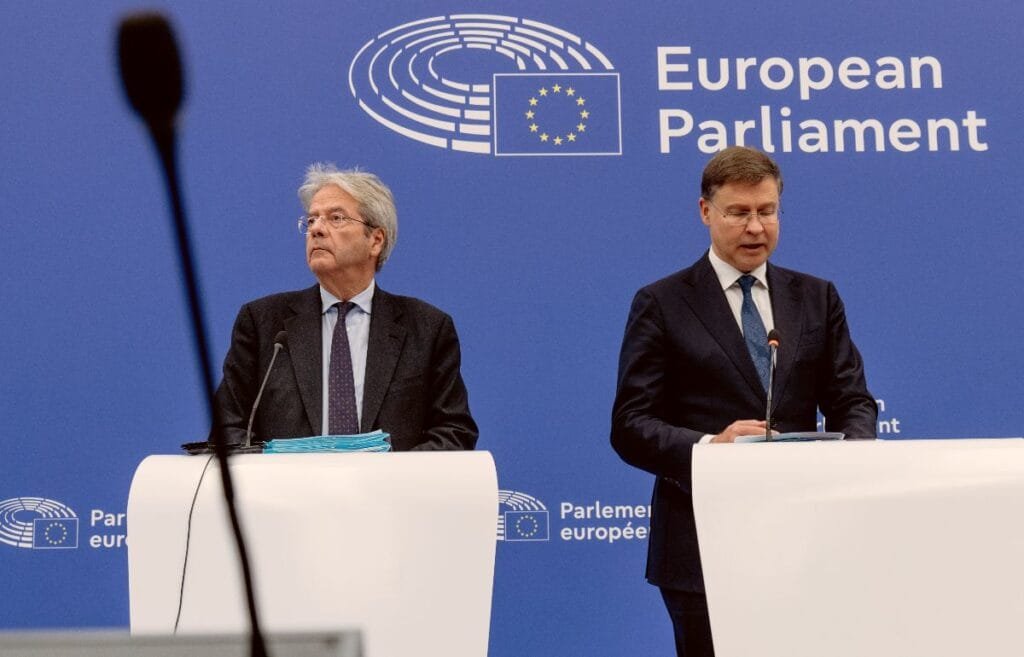
The European Semester Autumn Package is seen important in making the framework simpler, more transparent and effective, with greater national ownership.
The new framework supports Member States in achieving macroeconomic stability, growth and fiscal sustainability. It also encourages reforms and investments to lay foundations for long-term economic stability and sustainable growth.
The European Semester Autumn Package comes as the EU economy is returning to modest growth after a prolonged period of stagnation. Looking ahead, public investment is expected to increase in 2025 in almost all Member States, with a significant contribution from NextGenerationEU’s Recovery and Resilience Facility and EU funds in several Member States.
The new economic governance framework uses a single operational indicator, namely the Member State’s multi-annual net expenditure path, facilitating the tracking of compliance.
The new framework allows for a gradual and realistic reduction of public debt levels post-COVID-19 and the subsequent energy crisis.
The Commission has concluded its assessment for 21 out of the 22 submitted plans.
Of these, the Commission assessed that 20 meet the requirements of the new framework and set out a credible fiscal path to ensure that the respective Member States’ debt level is put on a sustainable downward path or kept at prudent levels. This concerns the following Member States: Croatia, Cyprus, Czechia, Denmark, Estonia, Finland, France, Ireland, Greece, Italy, Latvia, Luxembourg, Malta, Poland, Portugal, Romania, Slovakia, Slovenia, Spain and Sweden. For these Member States, the Commission recommends that the Council endorses the net expenditure path included in these plans. In the case of the Netherlands, the Commission has proposed that the Council recommend a net expenditure path consistent with the technical information the Commission transmitted in June.
The Commission is still assessing the medium-term plan of Hungary.
For five out of the 20 medium-term plans that have been assessed positively by the Commission, the net expenditure path is based on an extension of the adjustment period from four to seven years. The extension is underpinned by a set of reform and investment commitments included in the plans. In all five cases, the Commission assessed that the measures included in their plans met the criteria to justify an extension. This concerns the medium-term plans of Finland, France, Italy, Spain and Romania.
The Commission has also assessed the draft budgetary plans (DBPs) for 2025 presented by 17 euro area Member States and has examined whether they represent appropriate first steps to implement the respective medium-term plans.
The Commission’s assessment of the DBPs is focused on net expenditure growth in 2024-2025, assessing whether net expenditure is within the ceilings set out in the Member States’ medium-term plans, provided such a plan is available and considered to be compliant with the new framework.
Eight euro area Member States are considered to be in line with the fiscal recommendations, while seven are not fully in line, one is not in line, and one risks not to be in line:
- Greece, Cyprus, Latvia, Slovenia, Slovakia, Italy, Croatia and France are assessed to be in line with the recommendations, as their net expenditure is projected to be within the ceilings.
- Estonia, Germany, Finland, and Ireland are assessed to be not fully in line as their annual (Finland, Ireland) and/or cumulative (Estonia, Germany, Ireland) net expenditure is projected to be above the respective ceilings.
- Luxembourg, Malta, and Portugal are assessed to be not fully in line with the recommendation: while their net expenditure is projected within the ceilings, they do not phase out the energy emergency support measures by winter 2024-2025, as recommended by the Council.
- The Netherlands is assessed to be not in line with the recommendation, as the net expenditure is projected above the ceilings.
- Lithuania is assessed to risk being not in line with the recommendation, as the net expenditure is projected to exceed the rates that the Commission would consider as an appropriate first step in the implementation of the new economic governance framework.Questions and answers on the 2024 European Semester Autumn Fiscal Package