Close Menu
    Latest Category
    • Finance
    • Tech
    • EU Law
    • Energy
    • About
    • Contact
    EUbusiness.com | EU news, business and politicsEUbusiness.com | EU news, business and politics
    Login
    • EU News
    • Focus
    • Guides
    • Press
    • Jobs
    • Events
    • Directory
    EUbusiness.com | EU news, business and politicsEUbusiness.com | EU news, business and politics
    Home » Performance risks in EU defence plans, say auditors

    Performance risks in EU defence plans, say auditors

    npsnps12 September 2019Updated:25 June 2024 Finance
    — Filed under: Defence EU News Headline1
    Share
    Facebook Twitter LinkedIn Pinterest Email
    Performance risks in EU defence plans, say auditors

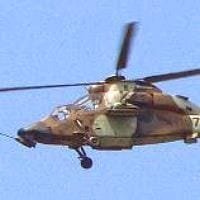
    Eurocopter Tiger Copyright © 2007 David Monniaux

    (LUXEMBOURG) – The current military capabilities and cooperation of the EU Member States do not match the new level of ambition of the EU’s defence policy, says a review by the European Court of Auditors, out Thursday.

    The auditors’ report says synergies between EU initiatives and other defence and security frameworks are essential. There is in particular a critical point of whether the EU will be able to complement NATO and avoid duplication and overlapping. However, it says that recent initiatives at EU level and the proposed increase in funding entail performance risks.

    Member States remain strongly in the driving seat when it comes to European defence and, until 2014, there had only been limited action at EU level. However, recent international developments, coupled with economic and industrial considerations, have given European defence cooperation new momentum. Following the 2016 EU Global Strategy and its implementation plan on security and defence, several initiatives and mechanisms have been launched. In this context, the European Commission has proposed a marked increase in the EU budget for defence and external security: €22.5 billion for 2021-2027, compared to €2.8 billion for the 2014-2020 period.

    The auditors see a risk that proper control systems may not be in place to accommodate such an increase in EU spending. They also acknowledge that defence is a domain which lies at the heart of national sovereignty. There appear to be clear strategic differences across EU Member States, whose perceptions of security threats and vision of the EU’s role in defence may differ. Member States also have different rules of engagement and a wide range of views on the use of military force. In such a context, some concepts, such as “strategic autonomy” or “a European army”, remain broad and vague, the auditors note.

    They further add that it is essential to ensure the coherence of EU initiatives and synergies with other defence and security frameworks. This is particularly true where NATO is concerned, as for 22 Member States it remains the primary framework when it comes to collective defence. A critical point is whether the EU is able to complement NATO and so avoid duplicating and overlapping its functions.

    “Defence involves creating real military capabilities, with a clear potential to deter potential threats”, said Juhan Parts, the Member of the European Court of Auditors responsible for the review. “In the absence of critical success factors and without specifying clear goals, there is a risk that current EU defence initiatives remain a dead letter and end up with no outcome”.

    As regards defence capabilities, there is a clear gap between what the Member States are expected to do and what they can agree on and deliver. Military capabilities in the EU have been negatively affected by under-investments and cuts in national defence budgets in recent years, and are characterised by a high level of duplication and fragmentation, the auditors point out. This is aggravated by a lack of common technical standards, which is detrimental to the interoperability of the various armed forces in Europe. All in all, the current Member States’ military capabilities do not match the EU’s level of military ambition, and several hundred billion euros would be needed to overcome this gap if Europe had to defend itself without outside assistance. The United Kingdom’s withdrawal from the EU would further worsen this situation, as the UK is Europe’s biggest spender on defence, accounting for about a quarter of EU Member States’ total expenditure.

    Several defence-related initiatives and mechanisms have been set up in recent years, including the Permanent Structured Cooperation (PESCO), the Coordinated Annual Review of Defence (CARD) and the European Defence Fund. These initiatives and a proposed increase in funding at the level of the EU and national budgets can be regarded as a “step change” for European defence. However, their success largely depends on several key conditions that the auditors currently consider are not yet being met. These concern in particular: an effective EU planning process; the Member States’ participation; the impact on real capability needs; the governance and accountability framework.


    ECA Review No 09/2019: European defence

    Add A Comment
    Leave A Reply Cancel Reply

    You must be logged in to post a comment.

    nps
    • Website

    Related Content

    Fitto - Mînzatu - Photo © European Union 2026

    EUR 34.6 bn cohesion funds reallocated to EU’s strategic priorities

    ESM

    Procurement Officer, European Stability Mechanism, ESM

    Parmelin - von der Leyen - Photo by Dati Bendo © European Union 2026

    EU and Switzerland strengthen ties with package of agreements

    EUSPA logo

    Financial Officer, European Union Agency for the Space Programme, EUSPA

    Raffaele Fitto - Photo by Bogdan Hoyaux © European Union 2026

    EU to step up support for states bordering Russia, Belarus and Ukraine

    Tax haven - Photo by John Prefer on Unsplash

    EU adds Vietnam and Turks & Caicos Islands to tax havens blacklist

    LATEST EU NEWS
    Trade port cargo - Image by Pexels from Pixabay

    Landmark deal for reform of EU Customs Union

    27 March 2026
    E-commerce - Photo by Antoni Shkraba Studio on Pexels

    1 in 3 online traders in Europe incorrectly displayed discounts on Black Friday and Cyber Monday

    26 March 2026
    Trade - Image by Markus Kammermann from Pixabay

    EU trade in goods surplus down to EUR 128 bn in 2025

    26 March 2026
    Internet safety children - Photo by Jonathan Borba on Pexels

    Porn sites failing to block minors from accessing services, says EU

    26 March 2026
    Fitto - Mînzatu - Photo © European Union 2026

    EUR 34.6 bn cohesion funds reallocated to EU’s strategic priorities

    25 March 2026

    Subscribe to EUbusiness Week

    Get the latest EU news

    CONTACT INFO

    • EUbusiness, 117 High Street, Chesham Buckinghamshire, HP5 1DE, United Kingdom
    • +44(0)20 8058 8232
    • service@eubusiness.com

    INFORMATION

    • About Us
    • Advertising
    • Contact Info

    Services

    • Cookie Policy
    • Terms
    • Disclaimer

    SOCIAL MEDIA

    Facebook
    eubusiness.com © EUbusiness Ltd 2026

    Type above and press Enter to search. Press Esc to cancel.

    Manage Consent
    To provide the best experiences, we use technologies like cookies to store and/or access device information. Consenting to these technologies will allow us to process data such as browsing behavior or unique IDs on this site. Not consenting or withdrawing consent, may adversely affect certain features and functions.
    Functional Always active
    The technical storage or access is strictly necessary for the legitimate purpose of enabling the use of a specific service explicitly requested by the subscriber or user, or for the sole purpose of carrying out the transmission of a communication over an electronic communications network.
    Preferences
    The technical storage or access is necessary for the legitimate purpose of storing preferences that are not requested by the subscriber or user.
    Statistics
    The technical storage or access that is used exclusively for statistical purposes. The technical storage or access that is used exclusively for anonymous statistical purposes. Without a subpoena, voluntary compliance on the part of your Internet Service Provider, or additional records from a third party, information stored or retrieved for this purpose alone cannot usually be used to identify you.
    Marketing
    The technical storage or access is required to create user profiles to send advertising, or to track the user on a website or across several websites for similar marketing purposes.
    • Manage options
    • Manage services
    • Manage {vendor_count} vendors
    • Read more about these purposes
    View preferences
    • {title}
    • {title}
    • {title}

    Sign In or Register

    Welcome Back!

    Login to your account below.

    Lost password?