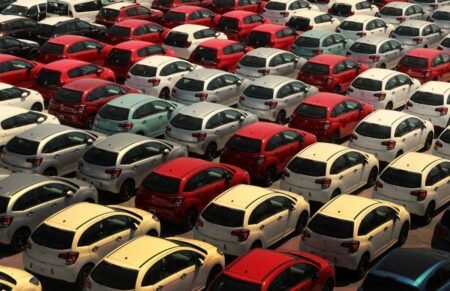
New European standards for ‘connected cars’, able to communicate with each other and with road infrastructures, are expected to appear on European roads in 2015.
Advertisement
Two European standards organisations, ETSI and CEN, confirmed on 12 February 2014 that the basic set of standards requested by the European Commission to make connected cars a reality has been fully completed. The norms which they have adopted ensure that vehicles made by different manufacturers can communicate with each other. The EU has invested more than 180 million in research projects on cooperative transport systems, whose results helped develop the standards. This is expected to put the European car industry, which provides 13 million jobs, out in front in the race to develop the next generation of cars.
1. What is the difference between a connected car, and a car we can buy today?
The cars that we can buy today include stand-alone driver assistance. It can help drivers to maintain a safe speed and distance, and drive within the lane for example. This has therefore positive effects on safety and traffic management. However, benefits could be further improved if individual vehicles were able to continuously communicate with each other and with the road infrastructure.
This is the aim of connected cars: they are able to communicate with each other and with road infrastructures. Cooperative Intelligent Transport Systems (C-ITS) can greatly increase the quality and reliability of information available about the vehicles, their location, their status and the road environment. Data available from vehicles are transmitted to a server for central fusion and processing. These data can be used to detect events such as rain (wiper activity) and congestion (frequent braking activities). The server processes a driving recommendation dedicated to a single or a specific group of drivers and transmits it wirelessly to vehicles. The system can, for example, warn you of an accident that has just happened, give you precious information at blind intersections or advise you on the best way to get to your destination avoiding traffic jams. Connected cars can therefore ensure safer journeys, save drivers’ time and reduce energy consumption.
2. How will this be different from what a GPS system does already?
One major advantage is that connected vehicles will exchange in real time information about hazards and events that happen in their surroundings, in a very dynamic way, complementing and increasing the accuracy of the information that satellite navigation systems can provide. Some mobile applications exist today to share information on traffic jams for example. Information is also broadcast over FM radio. But the accuracy of these systems cannot be compared to C-ITS.
3. Will these new technologies be in-built to every new car sold, or is it an extra option?
The system will be progressively integrated into new vehicles coming into the market. It is also expected that mobile cooperative system stations based on the same standards will appear into the market, being able to retrofit the existing fleet.
4. How will connected cars make our lives more convenient, our journeys greener, and our roads safer?
Connected cars will allow efficient real time traffic management and curb traffic congestion. They will provide alternative options to drivers in case of traffic jams or accidents. Vehicles will be informed about dangerous situations, e.g. a slippery road or a heavy fog ahead. Vulnerable road users will give precious information about their position to vehicles approaching them. Blind spots will not be an issue any more.
5. How will connected cars benefit the European economy?
Important economic benefits for citizens and companies will be generated thanks to more dependable journey times and reduced traffic congestion.
With more than 200 million vehicles on European roads today, connected cars also represent a significant market for European industries. With the new standards, the European car manufacturers, their suppliers and the telecoms industry are in the lead. In a similar way to the GSM/3G standards, which have allowed the appearance of a bunch of added value applications due to their interoperability, connected vehicles are expected to generate a great number of services. These connected vehicles will produce an important amount of useful data. The potential is huge as the treatment of big data is key for the ICT industry.