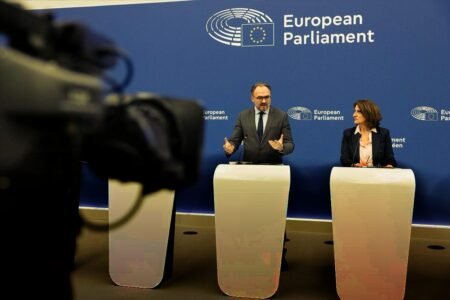
The European Commission has decided to encourage industry, governments and NGOs to set up certification schemes for all types of biofuels, including those imported into the EU.
Advertisement
What are biofuels?
Biofuels are transport fuels made from biomass. The most important biofuels today are bioethanol (made from sugar and cereal crops; used to replace petrol) and biodiesel (made mainly from vegetable oils; used to replace diesel). Biofuels accounted for about 3.4 % of transport fuel consumption in 2008 up from 0.5% five years earlier.
Why do we need biofuels?
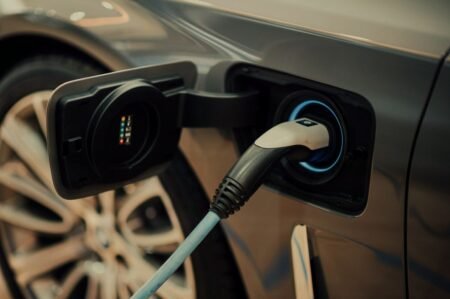
We need biofuels to fight climate change and to help reduce greenhouse emissions by 20% as pledged by the European Council in 2007. Biofuels are the main alternative to petrol and diesel used in transport, which produces more than 20% of the greenhouse gas emissions in the European Union.
How does the EU promote biofuels?
The 2009 Renewable Energy Directive1 sets binding targets for renewable energy. Every Member State has to reach individual targets for the overall share of renewable energy in energy consumption. In addition, in the transport sector, all Member States have to reach the same target of a 10% share of renewable energy. Biofuels are the main form of renewable energy used in transport.
What is new in two Communications?
* Sustainable Biofuel Certificate: The Commission encourages industry, governments and NGOs to set up voluntary certification schemes for biofuels. The Commission will assess whether these schemes are reliable and have fraud-resistant auditing. The certificates guarantee that all the biofuels sold under the label are sustainable and produced under the criteria set by the Renewable Energy Directive. All schemes have to have independent auditors which inspect the whole production chain, from the farmer to the trader and the fuel supplier.
* Protecting nature: The Commission explains very clearly which types of land can NOT be used to produce biofuels. These are: natural forests, protected areas, wetlands, peatlands. It explicitly rules out that forests can be converted into palm oil plantations.
* Promote only biofuels with high greenhouse gas savings: The Commission explains how to prove that the biofuels used have high greenhouse gas savings. It explains that all those which do not achieve greenhouse gas savings of 35 % compared to petrol and diesel, will not be accepted. This threshold will rise to 50% in 2017. In the calculation, not only carbon dioxide is included, but also methane (CH4) and di-nitrous oxide (N2O), both stronger greenhouse gases than CO2.
Does this mean that only these biofuels can be imported into the EU?
No. It means that only biofuels that meet these conditions will count for the national targets the 27 EU Member States have to reach by 2020 under 2009 Renewable Energy Directive. . This applies for all biofuels, whether they are produced within the European Union or imported from outside the EU. Only these biofuels can receive national public support such as tax relief.
How does the certificate work in practice?
An example: A UK fuel supplier who is using ethanol from Brazil has to notify the quantities of biofuels to the UK authorities. To show that they are sustainable according to the Directive, he can join a voluntary scheme.
The fuel supplier has to make sure that throughout the production chain all records are kept, by the trader he buys the biofuels from, by the ethanol plant the trader buys the ethanol from, and by the farmer who supplies the ethanol plant with sugar cane. This control is done before the company is joining the scheme and at least once a year thereafter.
The auditing is done as in the financial sector: The auditor is checking all the paper and inspects a sample of the farmers, mills and traders. He will check whether the land where the feedstock for the ethanol is produced has been indeed farm land before and not a tropical forest.
Can I see a label, when I go to the filling station?
It is not obligatory for a certification scheme to mark the end product with a label. However, schemes are free to do so. It would also make sense from a promotional point of view, if filling stations could show that they have sustainable biofuels. This is even more the case when a scheme applies sustainability criteria going even further than those required by EU law.
Have companies or governments already shown interest in setting up such a scheme?
The Commission is in contact with many different companies and organisations interested in setting up voluntary schemes. It is expected that now that it is clear what the requirements for auditing will be, they will come soon to ask the Commission for recognition of their voluntary schemes.
Can there not be fraud? Auditors are not there all the time.
In the very unlikely case and despite the independent auditing that there would still be a suspicion of fraud, any one can bring a case to the Commission and the Commission could take back the recognition of a scheme.
What biofuels are used in transport?
In 2007 biodiesel accounted for 75% (6.1 Mtoe) of EU renewable fuels in transport, bioethanol constituted 15% (1.24 Mtoe), and the remaining 10% was pure vegetable oil.
How much biofuel is imported into the EU?
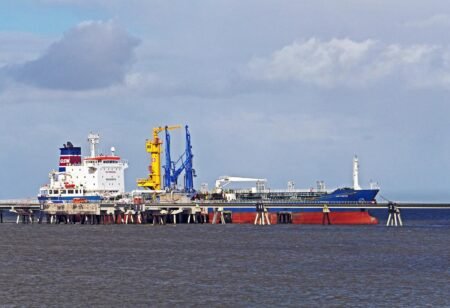
In 2007, about 26% of biodiesel and 31% of bioethanol consumed in the EU was imported. Most of those imports came from Brazil and the USA. The overall majority of biofuels are produced in the European Union. On top of the sustainability criteria, EU biofuels have to show compliance with EU environmental law and agricultural requirements, including landscape maintance, protection of soil against erosion and management of the use of water.
Land is limited. Do you not need to cut down forests to produce biofuels?
The 10% target would require some 2 5 Million hectares of land, according to different estimates of the net land use change impact. The EU has sufficient amount of land previously used for crop production and now no longer in arable use to cover the land needed, even if all the biofuels consumed were to be produced in Europe. Also in other parts of the world, there are alternatives to fresh deforestation. In Indonesia, there are an estimated 3 12 Million hectare of land that has been deforested in the past and left to become wasteland. It makes sense to bring this land into use.
Can you cut down rain forests and produce palm oil to make biofuels for the EU targets?
No. The Communication rules this out. It explicitly says that forests can not be converted into palm oil plantations.
Are most biofuels from palm oil?
Only about 4-5% of biofuel in the EU is produced from palm oil. This is about 1% of world palm oil production. Outside the EU the use of palm oil for biofuels is not large either. More than 95% of palm oil is used for food and industrial uses such as cosmetics.
Between 2000 and 2008, palm oil production increased by 20 million tons. That is forty times as much as the amount of palm oil going into biofuels in the EU (500.000 tons). So, biofuels are not the main cause of deforestation. The sustainability criteria are however a clear deterrent for deforestation.
EU studies show that biofuels are not saving greenhouse gas emissions. How is the EU reacting to this?
This is not the case. The recently released reports suggest that biofuels are saving greenhouse gas emissions. The Commission will publish a report on indirect land use by the end of the year, as requested in the Renewable Energy Directive on the basis of these studies.
Progress in the use of biofuels in the EU, 2003-2008
Share of biofuels in transport fuels
Member State | Biofuels share in 2003 | Biofuels share in 2008 | ||
Austria | 0.1 | 5.5 | ||
Belgium | 0.0 | 1.1 | ||
Bulgaria | – | 0.22 | ||
Cyprus | 0.0 | 1.3 | ||
Czech Republic | 1.1 | 1.3 | ||
Denmark | 0.0 | 0.23 | ||
Estonia | 0.0 | 0.6 | ||
Finland | 0.1 | 2.1 | ||
France | 0.7 | 5.7 | ||
Germany | 1.2 | 6.0 | ||
Greece | 0.0 | 1.0 | ||
Hungary | 0.0 | 3.5 | ||
Ireland | 0.0 | 1.6 | ||
Italy | 0.5 | 0.6 | ||
Latvia | 0.2 | 0.2 | ||
Lithuania | 0.0 | 4.3 | ||
Luxembourg | 0.0 | 2.0 | ||
Malta | 0.0 | 0.44 | ||
The Netherlands | 0.0 | 3.3 | ||
Poland | 0.5 | 3.7 | ||
Portugal | 0.0 | 2.0 | ||
Romania | – | 2.35 | ||
Slovakia | 0.1 | 2.7 | ||
Slovenia | 0.0 | 1.2 | ||
Spain | 0.4 | 2.0 | ||
Sweden | 1.3 | 5.0 | ||
UK | 0.0 | 2.0 | ||
EU25 | 0.5% | EU 27 | 3.4%6 |
Notes
1 : Directive 2009/28/ of 23 April 2009 Renewable Energy, OJ L 140/28, 5.6.2009
2 : Biodiesel only
3 : 2007 data
4 : Biodiesel only
5 : Biodiesel only
6 : Estimation
Source: European Commission