There were 9.4 million beehives on EU farms in 2023, according to Eurostat, with the number of beehives increasing by 1.3 million (+16%), from 8.1 million in 2020.

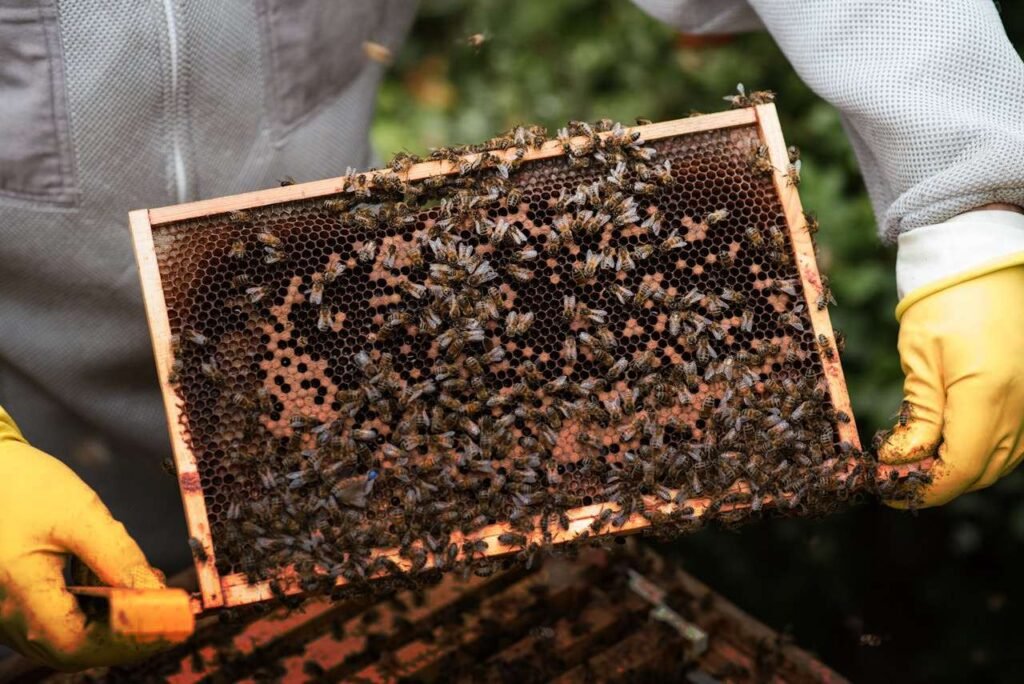
The data released by the EU’s statistics agency show what is a partial picture of all the beehives in the EU – because farm structure statistics only record beehives on farms.
Italy had almost 1.9 million beehives on farms in 2023, the highest number among EU countries, followed by Romania (1.7 million), Greece (1.2 million) and Bulgaria (1.0 million).

Among countries with available data, the number of beehives increased in 12 EU countries compared with 2020, most notably in Italy (+822 490 beehives; +79%). Conversely, there were declines in 10 countries, with the largest decreases in Hungary (-152 110; -34%) and Spain (-131 440; -14%).
Bees pollinate a wide range of crops that are grown in warmer and colder climates. They are able to survive colder temperatures by overwintering in their hives, using up honey reserves.
The news marks World Bee Day, aimed at raising awareness of the essential role bees and other pollinators play in keeping people and the planet healthy. The European Commission presented ‘A New Deal for Pollinators‘ in 2023 to tackle the alarming decline in wild pollinating insects in Europe.
EU-funded research to the rescue of bees and other wild pollinating insects
Thematic section on agriculture – Eurostat