Close Menu
    Latest Category
    • Finance
    • Tech
    • EU Law
    • Energy
    • About
    • Contact
    EUbusiness.com | EU news, business and politicsEUbusiness.com | EU news, business and politics
    Login
    • EU News
    • Focus
    • Guides
    • Press
    • Jobs
    • Events
    • Directory
    EUbusiness.com | EU news, business and politicsEUbusiness.com | EU news, business and politics
    Home » EU reliance on fossil fuels increased slightly in 2022

    EU reliance on fossil fuels increased slightly in 2022

    npsBy nps30 January 2024 No Comments2 Mins Read
    — Filed under: Energy EU News Facts & Figures Headline2
    Share
    Facebook Twitter LinkedIn Pinterest Email
    EU reliance on fossil fuels increased slightly in 2022

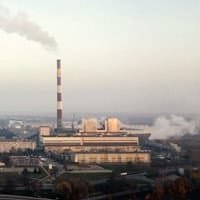
    Enery pollution – Photo by Marcin Jozwiak on Pexels

    (LUXEMBOURG) – The EU’s reliance on fossil fuels for its overall energy supply in 2022 showed a slight increase on 2021, from 69.9 to 70.9 per cent, according to figures released Tuesday by the EU statistics agency Eurostat.

    Eurostat’s figures are illustrated by the ratio of fossil fuels in gross available energy (the total energy demand of a country or region).

    The percentage had been decreasing significantly over the last decades. Since 1990, the first year for which data has been available, it dropped by around 11.5 percentage points (pp), mostly due to the increase in renewable energy.

    In 2022, Malta (96.1%) remained the EU country with the highest share of fossil fuels in gross available energy, followed by Cyprus (89.3%) and the Netherlands (87.6%). Most of the other EU countries had shares between 50% and 85%. Only Sweden (30.4%) and Finland (38.3%) had shares below 50%.

    The largest, if rather small, decreases in 2022, compared with 2021, in the share of fossil fuels in gross available energy were in Latvia (-3.7 pp), Slovakia (-2.1 pp), and Hungary (-1.9 pp). The largest increases were in Estonia (+4.2 pp), France (+2.9 pp), and Bulgaria (2.8 pp).

    The year 2022 was however exceptional from the energy perspective. It was the the first full calendar year after major restrictions related to COVID-19 were lifted. It was also marked by the Russian invasion of Ukraine on 24 February, and price spikes of various energy commodities.

    A decrease in nuclear power production was also noted in 2022. Even if renewable energy sources have increased, this was not enough to compensate for the decrease in nuclear energy.


    Eurostat thematic section on energy

    Eurostat energy visualisation tools

    Add A Comment
    Leave A Reply Cancel Reply

    You must be logged in to post a comment.

    nps
    • Website

    Related Content

    Oil tanker - Image by Erich Westendarp from Pixabay

    New EU mechanism to lower price cap for Russian crude oil to $44,10 per barrel

    Robot doctor - Image by Thomas Meier from Pixabay

    EU launches EUR 307m artificial intelligence and related technologies calls

    Farm flooded with cows - Image by Brigitte Werner from Pixabay

    Climate and nature risks threaten Europe’s financial resilience and insurability – WWF report

    Sponsor: WWF15 January 2026
    Valdis Dombrovskis - Photo © European Union 2026

    Brussels presents 2026–2027 financial support package for Ukraine

    Renewable energy - Image by Maria Maltseva from Pixabay

    Nearly 50pct EU electricity came from renewables in 2024

    Olives - Image by Marco Centenaro from Pixabay

    EU’s checks on olive oil need tightening up: auditors’ report

    LATEST EU NEWS
    Oil tanker - Image by Erich Westendarp from Pixabay

    New EU mechanism to lower price cap for Russian crude oil to $44,10 per barrel

    15 January 2026
    Robot doctor - Image by Thomas Meier from Pixabay

    EU launches EUR 307m artificial intelligence and related technologies calls

    15 January 2026
    Valdis Dombrovskis - Photo © European Union 2026

    Brussels presents 2026–2027 financial support package for Ukraine

    14 January 2026
    Renewable energy - Image by Maria Maltseva from Pixabay

    Nearly 50pct EU electricity came from renewables in 2024

    14 January 2026
    Olives - Image by Marco Centenaro from Pixabay

    EU’s checks on olive oil need tightening up: auditors’ report

    14 January 2026

    Subscribe to EUbusiness Week

    Get the latest EU news

    CONTACT INFO

    • EUbusiness, 117 High Street, Chesham Buckinghamshire, HP5 1DE, United Kingdom
    • +44(0)20 8058 8232
    • service@eubusiness.com

    INFORMATION

    • About Us
    • Advertising
    • Contact Info

    Services

    • Privacy Policy
    • Terms
    • EU News

    SOCIAL MEDIA

    Facebook
    eubusiness.com © EUbusiness Ltd 2026

    Type above and press Enter to search. Press Esc to cancel.

    Sign In or Register

    Welcome Back!

    Login to your account below.

    Lost password?