The UK has now left the EU with a deal, but how will Brexit and the new trade deal between the EU and the UK affect travel, trade, and business? Learn more.

The UK has finally left the EU after over four years of negotiations back and forth over Brexit. After a year’s transition period, during which most EU rules and regulations have continued to apply, the United Kingdom of Great Britain and Northern Ireland is no longer part of the European Union.
This means a huge shift in the relationship between the two, which affects business, trade, travel, and a whole host of other things.
Travelling between the UK and EU countries for work or business may now require the relevant visa, whereas previously the EU’s policy of free movement of workers applied to the UK. Even tourists may feel the pinch of Brexit within a few years, as it has been suggested that the eTA UK be expanded to be an entry requirement for Europeans. Equally, the EU is planning to introduce its own electronic travel authorisation system for citizens of third countries, which will likely include British nationals.
Despite having more than four years since 2016’s historic referendum to agree how the future of UK-EU relations would look, a deal still looked unlikely in late 2020. Then, at the eleventh hour, a new trade deal was reached in December taking effect on 1 January 2021.
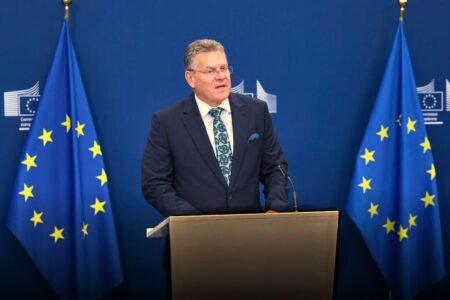
The historic EU-UK trade deal outlines a free trade agreement moving forward, as well as cooperation on security matters. It protects EU interests and has been described as “fair” and “balanced” by European Commission President Ursula von der Leyen.
The deal also comes as a relief to many in the UK, who feared the potential “cliff-edge” scenario of a no-deal Brexit, where imports and exports would have screeched to a halt on January 1.
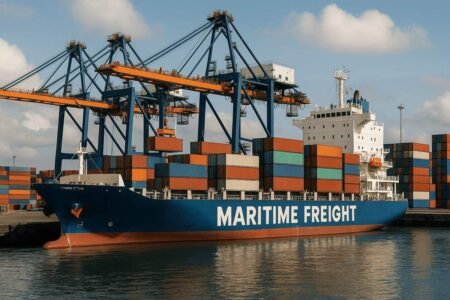
However, the UK’s new status as a third country has not come without its share of problems, particularly in the form of delays and chaos at ports. This has been exacerbated by the restrictions on travel due to the coronavirus pandemic ? indeed, images of lorries queuing up at Dover were appearing on the news before the end of 2020. That said, the virus cannot take all the blame.
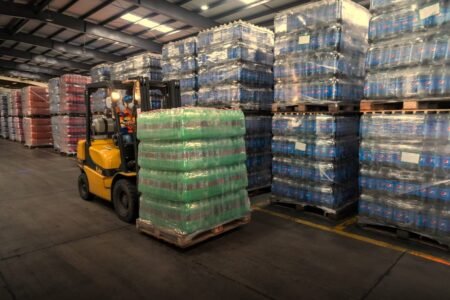
In the Republic of Ireland, many businesses anxiously await the arrival of products from the UK. Shops and supermarkets have gaps on the shelves; garage owners grow impatient waiting for the parts they ordered; drivers take shifts watching trailers at Dublin port until they are permitted to leave.
A large part of the problem is the red tape surrounding Brexit. According to chief executive of the Irish Exporters’ Association Simon McKeever, companies have failed to prepare adequately for trade post-Brexit on both sides of the Irish Sea, but particularly in the UK.
Ireland may also be hit hard in terms of trading to the rest of Europe, due to the rule of origins. Most Irish exports make their way to the continent via the UK. However, even though Ireland remains in the EU, goods that move through the UK are no longer considered to be of EU origin when being imported into another EU country, and therefore are subject to tariffs at customs.
This means that exporting from Ireland via the UK has become a lot more costly for Irish businesses. However, additional services from Rosslare to Dunkirk in France could provide another option for exports.
The Northern Ireland situation
In terms of trade, Northern Ireland has been placed in a unique situation under the terms of the agreement between the EU and the UK.
Although Northern Ireland is, and will remain, part of the United Kingdom, it will continue to operate under the rules and regulations of the EU single market, which effectively puts a customs border in the Irish Sea.
Although not everyone in Northern Ireland is happy with this arrangement, it does avoid the problematic situation of a hard border on the island of Ireland – something the EU prioritised in negotiations.
Northern Ireland has had a tumultuous history, with things coming to a head during the 20th century. The period known as “the Troubles” was characterised by sectarian violence between unionists, who favoured remaining part of the UK, and republicans, who wished to see the North reunited with the Republic of Ireland. Paramilitary groups on both sides, such as the UVF, UDA, and Provisional IRA committed numerous atrocities until finally, in the 1990s, the Good Friday Agreement (GFA) was brokered.
The GFA assured that while the North would remain part of the UK, there would never be a hard border between itself and the Republic. The paramilitary groups laid down their arms, agreeing to a ceasefire. Since then, there has been lasting peace. As long as both the UK and Ireland were in the EU, this peace would not be threatened.
However, the idea of a no-deal Brexit raised the ugly prospect of breaking the Good Friday Agreement and, worse still, the return of the Troubles.
The EU has worked to ensure that the terms of GFA were respected in the Brexit negotiations, leading to the current situation.
With a customs border in the Irish Sea, goods passing between Britain (England, Scotland, and Wales) and Northern Ireland are subject to customs checks, while those passing from Northern Ireland to the Republic or other EU member states are not.