

Fisheries ministers have reached a political agreement on fishing opportunities in the Atlantic, the North Sea, the Mediterranean, the Black Sea and other waters for 2026 and for certain stocks for 2027 and 2028.
The deal, reached following two days of negotiations, sets out fishing catch limits, known as ‘total allowable catches’ (TACs), and fishing effort limits for the most important commercial fish stocks. Fishing effort refers to the size and engine power of a vessel combined with the number of days spent fishing.
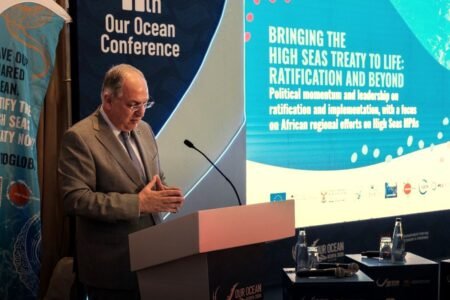
The compromise provides fishers with “certainty about their fishing opportunities for 2026,” said Denmark’s Fisheries Minister Jacob Jensen, for the EU presidency: “The compromise strikes a balance between the scientific advice and protecting vulnerable fish stocks, while also ensuring the best possible conditions for a sustainable fisheries sector in the future.”
The stocks covered by the two proposals are those the EU manages either on its own, jointly with neighbouring non-EU countries, or via agreements reached in regional fisheries management organisations (RFMOs).
Following the UK’s withdrawal from the EU, fish stocks jointly managed by the EU and the UK are considered shared resources under international law. In line with the EU-UK Trade and Cooperation Agreement, the parties hold annual talks to agree on catch limits and other measures for shared stocks. These talks were successfully concluded, and the outcome of the EU-UK deal was approved prior to the Agriculture and Fisheries Council. The political agreement integrates the outcome of the EU-UK deal into the main regulation for the Atlantic and North Sea.
Trilateral consultations on shared stocks between the EU, the UK and Norway were also successfully concluded ahead of the Council meeting. The catch limits and other measures agreed for those stocks also form part of the overall political agreement reached by the Council.
For the Atlantic and the North Sea, the agreement covers 24 TACs managed autonomously by the EU.
Following positive scientific advice and the improved state of the stocks, ministers agreed to increase the catch limits for the following stocks:
- megrims (+12%) in the Bay of Biscay south, Portuguese waters and the Azores, waters around Madeira and the Canary Islands
- Norway lobster in the Bay of Biscay, except south (+54%)
To safeguard stocks, in line with scientific advice, while looking for a balance with socioeconomic considerations, ministers agreed to reduce catch limits for:
- common sole in the Kattegat and the eastern and western Baltic Sea (-45%) and in the Bay of Biscay, north and central (-1%)
- horse mackerel in Portuguese waters (-5%)
- pollack in the Bay of Biscay, Portuguese waters and the Azores, waters around Madeira and the Canary Islands (-13%)
- Norway lobster in Portuguese waters and the Azores, waters around Madeira and the Canary Islands (-23%)
- anglerfish in the Bay of Biscay south, Portuguese waters and the Azores, waters around Madeira and the Canary Islands (-1%)
With consultations on mackerel amongst northeast Atlantic coastal states ongoing, ministers agreed on provisional catch limits for the first six months of 2026, in accordance with scientific advice (-70%) and pending agreement on a TAC. Given the seasonality of the mackerel fishery, it set the provisional catch limits at 90% of the level advised.
As regards the stocks concerned by the annual bilateral EU-Norway consultations, EU ministers also agreed on provisional catch limits for 2026, pending the signing of an agreed record.
Mediterranean and Black Sea
As far as the western Mediterranean is concerned, ministers agreed to maintain the 2025 level of fishing effort for trawlers in Spanish, French and Italian waters.
To mitigate short-term socioeconomic impact and reward more selective practices, ministers agreed to continue, in a slightly adjusted form, the use of the compensation mechanism. It was established for the first time for 2022 in order to allocate additional days to operators that opt for more selective gear or that are covered by a national conservation measure, as an incentive to increase the protection of the stock.
The Council also agreed to maintain the 2025 catch limits for blue and red shrimp both in Spanish and French waters, and in Italian and French waters. The same was decided for giant red shrimp, in Italian and French waters.
In the Black Sea, the Council agreed on a slightly lower TAC compared to 2025 in the case of turbot, which includes a carry-over of the unused EU turbot quota from 2024. It also agreed to maintain the closure period for turbot fishing from 15 April to 15 June.
For sprat, there has been a rollover compared to last year.
Fishing opportunities for 2026 (table)
Council approves EU-UK fishing deal for 2026 (press release, 10 December 2025)
Annexes to the Mediterranean and Black Seas fisheries proposal