Close Menu
    Latest Category
    • Finance
    • Tech
    • EU Law
    • Energy
    • About
    • Contact
    EUbusiness.com | EU news, business and politicsEUbusiness.com | EU news, business and politics
    Login
    • EU News
    • Focus
    • Guides
    • Press
    • Jobs
    • Events
    • Directory
    EUbusiness.com | EU news, business and politicsEUbusiness.com | EU news, business and politics
    Home » EU agree to reduce food waste, new rules on textile waste

    EU agree to reduce food waste, new rules on textile waste

    eub2eub219 February 2025 Environment
    — Filed under: EU News
    Share
    Facebook Twitter LinkedIn Pinterest Email

    The European Parliament and EU Council reached provisional agreement Tuesday on a targeted revision of the EU’s Waste Framework Directive.
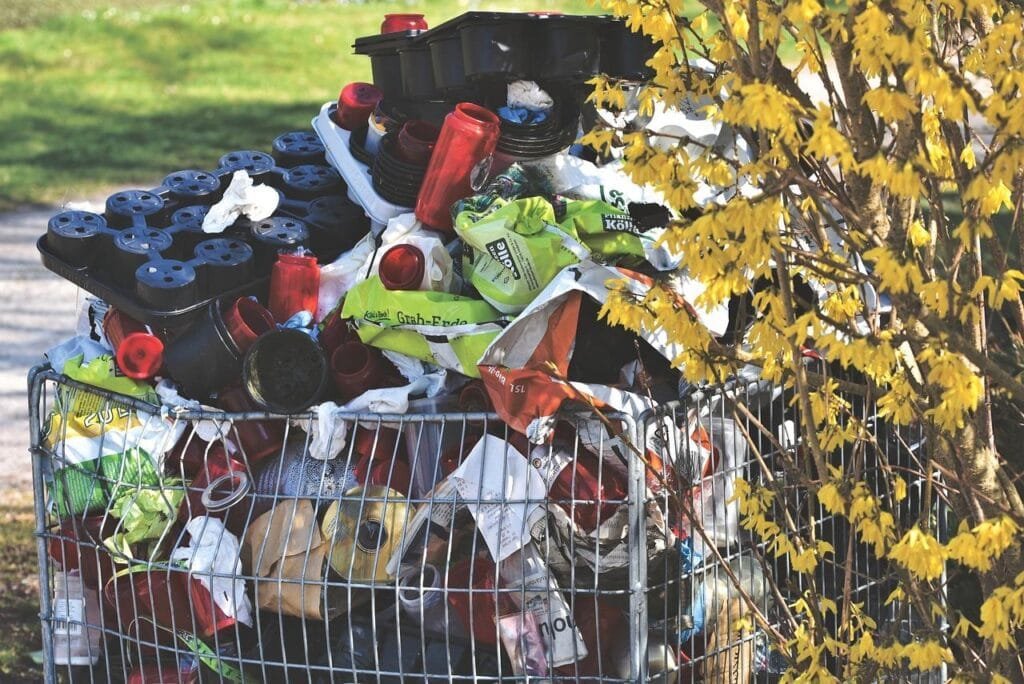
    Food waste - Image by Ralph from Pixabay

    The aim of the amended Waste Framework Directive is to promote a circular economy throughout the EU, foster innovation and move towards more sustainable industrial and consumer practices.

    Over 59 million tonnes of food waste are generated in the EU every year, representing an estimated loss of €132 billion. The EU also generates 12.6 million tonnes of waste textile per year. Clothing and footwear alone account for 5.2 million tonnes of waste, equivalent to 12 kg of waste per person every year.

    A common set of rules will increase sustainability for businesses and consumers, says the Commission, and harmonise the single market for used and waste textiles.

    The agreement accelerates EU ambition to halve per capita global food waste and reduce food losses along production and supply chains by 2030. EU Member States need to reduce food waste by 10% in processing and manufacturing by 2030. They also need to reduce food waste by 30% (per capita) jointly at retail and consumption, which includes restaurants, food services and households.

    Regarding textile waste, with the amended Waste Framework Directive each Member State will set up its own ‘Extended Producer Responsibility’ (EPR) scheme for textile and footwear products. Under such schemes, textile producers will contribute to the management of used and waste textiles. By being responsible for the end of lifetime of the products they sell, producers will be encouraged to design longer-lasting textile products that are easier to be reused, repaired and to recycle. This contribution will also foster investment in separate collection, sorting, reuse and recycling capacities. This will contribute to the creation of a circular economy for textiles.

    The new rules tackle illegal textile waste exports. By clearly defining what constitutes “waste” versus “reusable” textiles, sorting will take place before used textiles are shipped. This measure complements the new, which ensures textile waste is only exported when it can be managed in an environmentally sustainable manner.

    The European Parliament and the Council will now formally have to adopt the revised Directive before it can enter into force. Tjhis will be 20 days after its publication in the Official Journal of the EU. Member States will then need to transpose the Directive into national legislation within 20 months of the entry into force.

    Webpage on Waste Framework Directive

    Webpage on EU Strategy for Sustainable and Circular Textiles

    Factsheet on Extended Producer Responsibility for Textiles

    Webpage on Food Waste

    Add A Comment
    Leave A Reply Cancel Reply

    You must be logged in to post a comment.

    eub2
    • Website

    eub2 is the default publisher for EUbusiness.

    Related Content

    Chemical production nature clouds - Image by andreas N from Pixabay

    Commission to halt Omnibus packages as environmental rules reach “optimal simplicity”

    Sponsor: WWF2 April 2026
    House sparrow - Photo by Alexas Fotos on Pexels

    Brussels issues guidance for ‘more balanced’ rules on protecting wild birds

    European Council - Photo © European Union 2026

    EU leaders manage to avoid shooting themselves in the foot

    Sponsor: WWF21 March 2026
    Renewable energy - Image by Maria Maltseva from Pixabay

    47 pct of EU’s electricity came from renewables in 2025

    EUnited logo

    Environment & Sustainability Officer, European Engineering Industries Association, EUnited

    Pollution - Image by ivabalk from Pixabay

    Leading environmental NGOs warn: Deregulation push threatens Europe’s long-term competitiveness, security and public health

    Sponsor: WWF17 March 2026
    LATEST EU NEWS
    BEAK UAV drone made by Origin Robotics - Photo by Gints Ivuskans © European Union 2025

    Brussels boosts support to Ukrainian deep tech innovators

    2 April 2026
    Zelensky - Kallas- Ukraine - Photo © European Union 2026

    EU to deliver EUR 1.4 bn revenue from frozen Russian assets to be used for support to Ukraine

    2 April 2026
    House sparrow - Photo by Alexas Fotos on Pexels

    Brussels issues guidance for ‘more balanced’ rules on protecting wild birds

    1 April 2026
    Bankruptcy - Image by Michael Schüller from Pixabay

    EU Council greenlights common EU rules for insolvency proceedings

    30 March 2026
    European-made armoured vehicles - Photo © European Union 2025

    Brussels EUR 1.5 bn work programme to boost European and Ukrainian defence industry

    30 March 2026

    Subscribe to EUbusiness Week

    Get the latest EU news

    CONTACT INFO

    • EUbusiness, 117 High Street, Chesham Buckinghamshire, HP5 1DE, United Kingdom
    • +44(0)20 8058 8232
    • service@eubusiness.com

    INFORMATION

    • About Us
    • Advertising
    • Contact Info

    Services

    • Cookie Policy
    • Terms
    • Disclaimer

    SOCIAL MEDIA

    Facebook
    eubusiness.com © EUbusiness Ltd 2026

    Type above and press Enter to search. Press Esc to cancel.

    Manage Consent
    To provide the best experiences, we use technologies like cookies to store and/or access device information. Consenting to these technologies will allow us to process data such as browsing behavior or unique IDs on this site. Not consenting or withdrawing consent, may adversely affect certain features and functions.
    Functional Always active
    The technical storage or access is strictly necessary for the legitimate purpose of enabling the use of a specific service explicitly requested by the subscriber or user, or for the sole purpose of carrying out the transmission of a communication over an electronic communications network.
    Preferences
    The technical storage or access is necessary for the legitimate purpose of storing preferences that are not requested by the subscriber or user.
    Statistics
    The technical storage or access that is used exclusively for statistical purposes. The technical storage or access that is used exclusively for anonymous statistical purposes. Without a subpoena, voluntary compliance on the part of your Internet Service Provider, or additional records from a third party, information stored or retrieved for this purpose alone cannot usually be used to identify you.
    Marketing
    The technical storage or access is required to create user profiles to send advertising, or to track the user on a website or across several websites for similar marketing purposes.
    • Manage options
    • Manage services
    • Manage {vendor_count} vendors
    • Read more about these purposes
    View preferences
    • {title}
    • {title}
    • {title}

    Sign In or Register

    Welcome Back!

    Login to your account below.

    Lost password?