Close Menu
    Latest Category
    • Finance
    • Tech
    • EU Law
    • Energy
    • About
    • Contact
    EUbusiness.com | EU news, business and politicsEUbusiness.com | EU news, business and politics
    Login
    • EU News
    • Focus
    • Guides
    • Press
    • Jobs
    • Events
    • Directory
    EUbusiness.com | EU news, business and politicsEUbusiness.com | EU news, business and politics
    Home » EU’s single currency turns 20 years old

    EU’s single currency turns 20 years old

    npsBy nps9 January 2019Updated:25 June 2024 No Comments3 Mins Read
    — Filed under: EU News Euro Headline2
    Share
    Facebook Twitter LinkedIn Pinterest Email
    EU's single currency turns 20 years old

    Euro

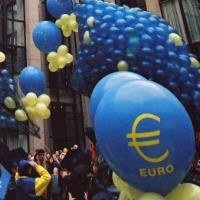
    (BRUSSELS) – The euro, Europe’s common currency, turned 20 on 1 January 2019. 11 EU states launched the euro in January 1999, introducing a shared monetary policy under the European Central Bank.

    The historic moment was a milestone on a journey driven by an ambition of ensuring stability and prosperity in Europe.

    Today, the euro is the currency of 340 million Europeans in 19 EU Member States. It has brought benefits to European households, businesses and governments alike: stable prices, lower transaction costs, protected savings, more transparent and competitive markets, and increased trade.

    Some 60 countries around the world link their currencies to the euro in one way or another, while other EU Member States are expected to join the euro area once the criteria are met.

    “The euro was a logical and necessary consequence of the single market,” said the President of the European Central Bank Mario Draghi: “It makes it easier to travel, trade and transact within the euro area and beyond.”

    He added that the ECB contributed to the well-being of euro area citizens “by developing safe, innovative banknotes, promoting secure payment systems, supervising banks to ensure they are resilient and overseeing financial stability in the euro area.”

    The journey towards launch of the euro started with the global monetary turmoil of the 1970s and 1980s, which exposed individual European countries and called for European solutions.

    With the establishment of a single market, it would make it easier to work and trade if Europeans could start to use a single currency. The agreement that political leaders signed in 1992 in Maastricht brought the single currency to life. The signing of the Maastricht Treaty became a symbolic moment in the move towards the euro. In 1994, the European Monetary Institute (EMI) started its preparatory work in Frankfurt for the European Central Bank (ECB) to assume its responsibility for monetary policy in the euro area. As a result, on 1 June 1998, the ECB became operational.

    The euro was launched on 1 January 1999, becoming the official currency of 11 Member States, with monetary policy responsibilities given to the European Central Bank and the Eurosystem.

    After three years of appearing on people’s bank statements alongside national currencies, euro banknotes and coins arrived in 12 countries, which thereby participated in the largest currency changeover in history. The original members were Austria, Belgium, Finland, France, Germany, Ireland, Italy, Luxembourg, Netherlands, Spain and Portugal. Greece joined in 2001. Since then, a further seven Member States have introduced the euro (Cyprus, Estonia, Latvia, Lithuania, Malta, Slovakia and Slovenia).

    #EUROat20

    Add A Comment
    Leave A Reply Cancel Reply

    You must be logged in to post a comment.

    nps
    • Website

    Related Content

    Oil tanker - Image by Erich Westendarp from Pixabay

    New EU mechanism to lower price cap for Russian crude oil to $44,10 per barrel

    Robot doctor - Image by Thomas Meier from Pixabay

    EU launches EUR 307m artificial intelligence and related technologies calls

    Farm flooded with cows - Image by Brigitte Werner from Pixabay

    Climate and nature risks threaten Europe’s financial resilience and insurability – WWF report

    Sponsor: WWF15 January 2026
    Valdis Dombrovskis - Photo © European Union 2026

    Brussels presents 2026–2027 financial support package for Ukraine

    Renewable energy - Image by Maria Maltseva from Pixabay

    Nearly 50pct EU electricity came from renewables in 2024

    Olives - Image by Marco Centenaro from Pixabay

    EU’s checks on olive oil need tightening up: auditors’ report

    LATEST EU NEWS
    Oil tanker - Image by Erich Westendarp from Pixabay

    New EU mechanism to lower price cap for Russian crude oil to $44,10 per barrel

    15 January 2026
    Robot doctor - Image by Thomas Meier from Pixabay

    EU launches EUR 307m artificial intelligence and related technologies calls

    15 January 2026
    Valdis Dombrovskis - Photo © European Union 2026

    Brussels presents 2026–2027 financial support package for Ukraine

    14 January 2026
    Renewable energy - Image by Maria Maltseva from Pixabay

    Nearly 50pct EU electricity came from renewables in 2024

    14 January 2026
    Olives - Image by Marco Centenaro from Pixabay

    EU’s checks on olive oil need tightening up: auditors’ report

    14 January 2026

    Subscribe to EUbusiness Week

    Get the latest EU news

    CONTACT INFO

    • EUbusiness, 117 High Street, Chesham Buckinghamshire, HP5 1DE, United Kingdom
    • +44(0)20 8058 8232
    • service@eubusiness.com

    INFORMATION

    • About Us
    • Advertising
    • Contact Info

    Services

    • Privacy Policy
    • Terms
    • EU News

    SOCIAL MEDIA

    Facebook
    eubusiness.com © EUbusiness Ltd 2026

    Type above and press Enter to search. Press Esc to cancel.

    Sign In or Register

    Welcome Back!

    Login to your account below.

    Lost password?