Close Menu
    Latest Category
    • Finance
    • Tech
    • EU Law
    • Energy
    • About
    • Contact
    EUbusiness.com | EU news, business and politicsEUbusiness.com | EU news, business and politics
    Login
    • EU News
    • Focus
    • Guides
    • Press
    • Jobs
    • Events
    • Directory
    EUbusiness.com | EU news, business and politicsEUbusiness.com | EU news, business and politics
    Home » EU VAT reform to crack down on fraud

    EU VAT reform to crack down on fraud

    npsnps5 October 2017
    — Filed under: EU News Headline SMEs VAT
    Share
    Facebook Twitter LinkedIn Pinterest Email
    EU VAT reform to crack down on fraud

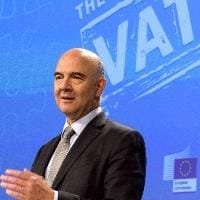
    Pierre Moscovici – Photo EC

    (BRUSSELS) – The EU Commission set out plans Wednesday for the biggest reform of EU VAT rules in a quarter of a century, hoping to crack down on an estimated EUR 50 billion in tax revenue lost to cross-border VAT fraud.

    Overall, over €150 billion of VAT is lost every year, of which around €50 billion – or €100 per EU citizen each year – is estimated to be due to cross-border VAT fraud. This money can be used to finance criminal organisations, says the Commission, including terrorism. It is estimated that this sum would be reduced by 80% thanks to the proposed reform.

    The proposed VAT reform would make the system more robust and simpler to use for companies. Businesses trading cross-border currently suffer from 11% higher compliance costs compared to those trading only domestically. Simplifying and modernising VAT should reduce these costs by an estimated €1 billion, says the Commission.

    Taxation Commissioner Pierre Moscovici said “companies and consumers still face 28 different VAT regimes when operating cross-border. Criminals and possibly terrorists have been exploiting these loopholes for too long, organising a €50bn fraud per year.”

    Mr Moscovici maintained that EU Member States should be considering cross-border VAT transactions as domestic operations in the EU our internal market by 2022: “Today’s proposal is expected to reduce cross-border VAT fraud by around 80%. At the same time, it will make life easier for EU companies trading across borders, slashing red tape and simplifying VAT-related procedures,” he added.

    With today’s package, the Commission proposes to fundamentally change the current VAT system by taxing sales of goods from one EU country to another in the same way as goods are sold within individual Member States. This will create a new and definitive VAT system for the EU.

    The EU executive says it will seek agreement on four fundamental principles, or ‘cornerstones’ of a new definitive single EU VAT area:

    • Tackling fraud: VAT will now be charged on cross-border trade between businesses. Currently, this type of trade is exempt from VAT, providing an easy loophole for unscrupulous companies to collect VAT and then vanish without remitting the money to the government.
    • One Stop Shop: It will be simpler for companies that sell cross-border to deal with their VAT obligations thanks to a ‘One Stop Shop’. Traders will be able to make declarations and payments using a single online portal in their own language and according to the same rules and administrative templates as in their home country. Member States will then pay the VAT to each other directly, as is already the case for all sales of e-services.
    • Greater consistency: A move to the principle of ‘destination’ whereby the final amount of VAT is always paid to the Member State of the final consumer and charged at the rate of that Member State. This has been a long-standing commitment of the European Commission, supported by Member States. It is already in place for sales of e-services.
    • Less red tape: Simplification of invoicing rules, allowing sellers to prepare invoices according to the rules of their own country even when trading across borders. Companies will no longer have to prepare a list of cross-border transactions for their tax authority (the so-called ‘recapitulative statement’).

    Today’s proposal also introduces the notion of a Certified Taxable Person – a category of trusted business that will benefit from much simpler and time-saving rules. Four ‘quick fixes’ have also been proposed, to come into force by 2019. These short-term measures were explicitly requested by Member States to improve the day-to-day functioning of the current VAT system until the definitive regime has been fully agreed and implemented.

    The legislative proposal will be sent to the Member States in the Council for agreement and to the European Parliament for consultation. The Commission says it will follow this initiative in 2018 with a detailed legal proposal to amend the so-called ‘VAT Directive’ at technical level so that the definitive VAT regime proposed today can be smoothly implemented.

    VAT reform in the EU - background guide

    Communication : On the follow-up to the Action Plan on VAT Towards a single EU VAT area – Time to act

    Add A Comment
    Leave A Reply Cancel Reply

    You must be logged in to post a comment.

    nps
    • Website

    Related Content

    Euro coins and notes - Photo by Pixabay

    Eurozone Economic Calendar

    Chemical production nature clouds - Image by andreas N from Pixabay

    Commission to halt Omnibus packages as environmental rules reach “optimal simplicity”

    Sponsor: WWF2 April 2026
    BEAK UAV drone made by Origin Robotics - Photo by Gints Ivuskans © European Union 2025

    Brussels boosts support to Ukrainian deep tech innovators

    Zelensky - Kallas- Ukraine - Photo © European Union 2026

    EU to deliver EUR 1.4 bn revenue from frozen Russian assets to be used for support to Ukraine

    House sparrow - Photo by Alexas Fotos on Pexels

    Brussels issues guidance for ‘more balanced’ rules on protecting wild birds

    Bankruptcy - Image by Michael Schüller from Pixabay

    EU Council greenlights common EU rules for insolvency proceedings

    LATEST EU NEWS
    BEAK UAV drone made by Origin Robotics - Photo by Gints Ivuskans © European Union 2025

    Brussels boosts support to Ukrainian deep tech innovators

    2 April 2026
    Zelensky - Kallas- Ukraine - Photo © European Union 2026

    EU to deliver EUR 1.4 bn revenue from frozen Russian assets to be used for support to Ukraine

    2 April 2026
    House sparrow - Photo by Alexas Fotos on Pexels

    Brussels issues guidance for ‘more balanced’ rules on protecting wild birds

    1 April 2026
    Bankruptcy - Image by Michael Schüller from Pixabay

    EU Council greenlights common EU rules for insolvency proceedings

    30 March 2026
    European-made armoured vehicles - Photo © European Union 2025

    Brussels EUR 1.5 bn work programme to boost European and Ukrainian defence industry

    30 March 2026

    Subscribe to EUbusiness Week

    Get the latest EU news

    CONTACT INFO

    • EUbusiness, 117 High Street, Chesham Buckinghamshire, HP5 1DE, United Kingdom
    • +44(0)20 8058 8232
    • service@eubusiness.com

    INFORMATION

    • About Us
    • Advertising
    • Contact Info

    Services

    • Cookie Policy
    • Terms
    • Disclaimer

    SOCIAL MEDIA

    Facebook
    eubusiness.com © EUbusiness Ltd 2026

    Type above and press Enter to search. Press Esc to cancel.

    Manage Consent
    To provide the best experiences, we use technologies like cookies to store and/or access device information. Consenting to these technologies will allow us to process data such as browsing behavior or unique IDs on this site. Not consenting or withdrawing consent, may adversely affect certain features and functions.
    Functional Always active
    The technical storage or access is strictly necessary for the legitimate purpose of enabling the use of a specific service explicitly requested by the subscriber or user, or for the sole purpose of carrying out the transmission of a communication over an electronic communications network.
    Preferences
    The technical storage or access is necessary for the legitimate purpose of storing preferences that are not requested by the subscriber or user.
    Statistics
    The technical storage or access that is used exclusively for statistical purposes. The technical storage or access that is used exclusively for anonymous statistical purposes. Without a subpoena, voluntary compliance on the part of your Internet Service Provider, or additional records from a third party, information stored or retrieved for this purpose alone cannot usually be used to identify you.
    Marketing
    The technical storage or access is required to create user profiles to send advertising, or to track the user on a website or across several websites for similar marketing purposes.
    • Manage options
    • Manage services
    • Manage {vendor_count} vendors
    • Read more about these purposes
    View preferences
    • {title}
    • {title}
    • {title}

    Sign In or Register

    Welcome Back!

    Login to your account below.

    Lost password?