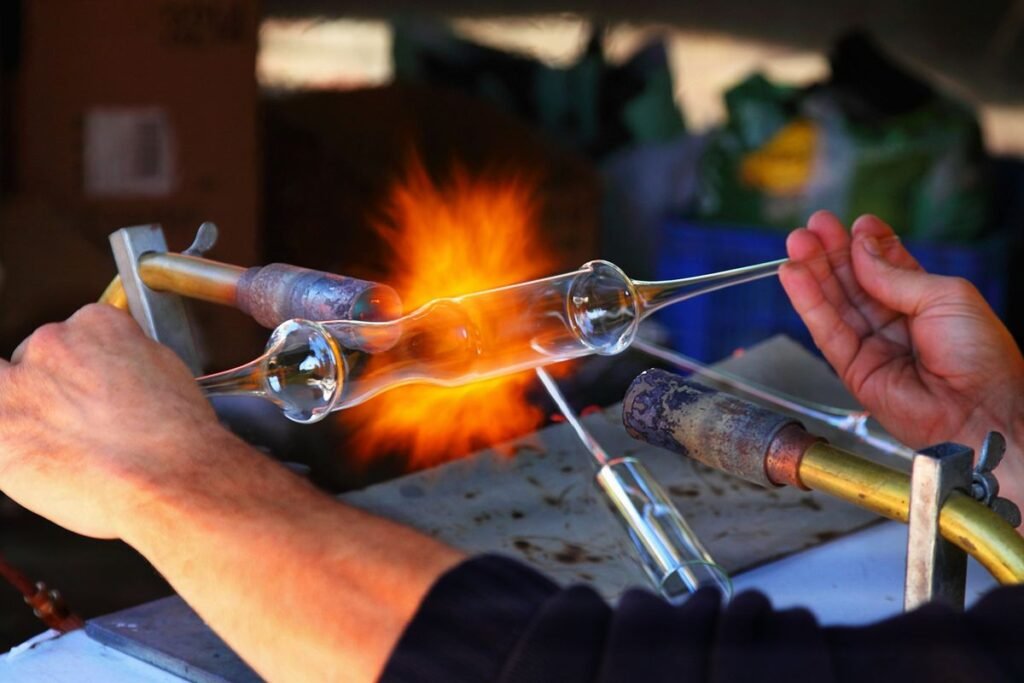
Glassblowers, potters, jewellers and other European makers can from 1 December register their product names under the EU’s new geographical indication scheme for craft and industrial goods.

Geographical indications are intellectual property rights that link a product’s qualities, reputation, or features to its place of origin. This marks the first time GI protection, long used for food and drink, can cover non-agricultural products.
The system will protect iconic goods such as Bohemian glass, Limoges porcelain, Solingen knives and Donegal tweed, whose reputation and quality stem from their place of origin. The aim is for protection to safeguard traditional skills, support local jobs and help consumers recognise genuine, high-quality European products. This in turnm should strengthen regional economies, preserve cultural identity and curb counterfeits both online and offline.
Producers can apply through a recognised association or individually. Each application must include a ‘product specification’ outlining the name, production process and geographical area, and should be submitted to the relevant national authority in the EU Member States.
GI registration has two steps:
- National level – the authority reviews the application and runs a national opposition procedure.
- EU level – the application is then assessed by the EUIPO, which handles the EU-wide opposition procedure and decides on protection and registration.
Denmark, Finland, Lithuania, Luxembourg, Malta, the Netherlands and Sweden have obtained a derogation for the national phase and producers will exceptionally be able to apply directly to the EU Intellectual Property Office (EUIPO), which manages the whole procedure.
The Commission may intervene in cases where a registration could affect public policy or the EU’s trade and external relations.
Guidance, templates and contacts are available on the EUIPO’s CIGI Hub, including information on financial and technical support.
DG GROW – Geographical indications for craft and industrial products